
Have you Ever been Swept Off Your Feet?
In both cases – whether the bubble was inflated with positive or negative energy – the participants in the bubble are being swept away further and further away from actual physical reality and start to see everything either ‘extremely negatively’ or ‘extremely positively’ – neither experience is grounded in reality – because the physical is neither positive or negative – it just is what it is.

And Then You Crash – Meconomics
In this little series, we’ve been investigating the phenomenon of inflation, how we in our daily lives participate in ‘inflating our reality’ and so, how we are on a personal level participating in the same principles/dynamics that we see playing out on a bigger scale when it comes to inflation, speculative bubbles and financial market crashes.

Welcoming New Life with Living Income Guaranteed
Comfort, security and nurturing are all things we wish are present when a baby comes into this world. Yet, these conditions are not a reality for many babies, as parents themselves like these things in their lives. In Pietermaritzburg, the capital of KwaZulu Natal province in South Africa, 3 to 5 babies are…

Humanity Washed Ashore
This was an excerpt of just one of the stories about the boy. Over the last few days, dozens have been written and published on various major news sites. What is more striking than the content of the posts, is the comments that are left on these articles. What is humanity’s response to such images, to such news?

Voting Fun – What does it Feel Like to Have a Say?
Now – before such increased direct political participation is a reality – let’s do a little test to see what it feels like. So – here are some mock-questions where you’re asked to give your input. Imagine that this relates to your direct reality (eg. your town) – and your answer has a weight that influences the outcome of the decision. Of course, in reality…
Showing posts with label poverty. Show all posts
Showing posts with label poverty. Show all posts
02 September 2015

12 May 2015
Meconomics: I Want my Needs and Need my Wants to be Satisfied

As I was reading about the economic problem for the first time – I found it fascinating that they used the words ‘wants’ and ‘needs’ in the same way and treated them as one term – like this: ‘wants&needs’ – lol. The difference between wants and needs was briefly explained, but then both words were thrown under the ‘wants&needs’ banner – as though ‘needs’ carry the same characteristics as ‘wants’ and ‘wants’ carry the same characteristics as ‘needs’. When you approach the economic problem by reading the words ‘wants’ and ‘needs’ as ‘wants&needs’ - then the world as it is today might make sense to you – then the economic problem might actually be a justification for the desolation and lack in which millions live. Perhaps that is how economists want us to read the words, so that we won’t hold them accountable for not yet having come up with a better solution.
‘Wants’ and ‘needs’, however, are two very different things. ‘Needs’ are things you NEED – that you cannot go without or you will be physically and emotionally compromised. ‘Wants’ are things you WANT – they go beyond what you ‘need’ – you can go without, but you would like or prefer to experience them or have them in your life. It is true to say that if you tally up all the individual wants of all the people on the planet – you will end up with ‘unlimited wants’. The same is not true for needs, however – there are certain things no human being can go without – say food, water, shelter, social interaction, medical support – where this is the same for every single person by virtue of them being ‘a human’ – and where for some, dependent on personal situations and circumstances, the list is expanded to include a few other things as well.
Considering that needs are limited – we may actually be able to satisfy the needs of all the human beings on the planet – and it is known that we can. So – instead of trying to work with ‘wants&needs’ where the task seems impossible and full of ‘sorry’s, we have to draw the line somewhere’ – we could start with the part that IS possible – satisfying everyone’s needs – and only then design an additional system or model that draws lines for ‘wants’. Our current model is one where some are able to satisfy all their needs and most of their wants, while others are not supported in their basic needs – which, you have to admit, is quite an insane situation. Part of why this is allowed is due to… ‘wants&needs’.
Now – this blog is part of my ‘Meconomics’ series – so you can already guess where I am taking this discussion next… For this situation to be as it is – with so few raising their voice and spurring into action to change the status quo – I started wondering how the same point exists within ourselves. The same point, meaning: do we in fact have a clear understanding of the difference between ‘wants’ and ‘needs’ inside ourselves and do we approach ‘wants’ and ‘needs’ appropriately in our own personal lives?
True story: Earlier as I was writing this blog and came to the section of clarifying the words ‘wants’ and ‘needs’ – I first took the easy route of simply looking up the words in the dictionary and copy/pasting the definitions in my blog. But! I couldn’t use those definitions, because they would have perpetuated the confusion between the words rather than clarifying the difference between them. Have a look:


If the dictionary uses the word ‘want’ to clarify the word ‘need’ and uses the word ‘need’ to clarify the word ‘want’ – we can be sure we’re on to something. Does this mean that wants simply imply needs and that needs imply wants – because the dictionary says so? No. Remember, dictionaries will reflect our own language usage – so if the word ‘want’ has been used over time to indicate a ‘need’ – then it becomes an ‘accepted use of the word’ and is reflected in the dictionary as such. In the same way, the word ‘need’ has been used to describe ‘wants’ – and so it has become ‘normal’. What the dictionary then shows is how we have confused the meanings of the words ‘wants’ and ‘needs’ for ourselves and started using the terms as synonyms.
In my next blog I will continue exploring how the ‘merging’ of the words ‘wants’ and ‘needs’ as ‘wants&needs’ affects and influences us on a personal level so that we can get a better understanding of the world as it exists today within the principle 'as above, so below'.
15 October 2013
Day 250: Economics Nobel Prize reduced to Laughingstock
“The award was for their work on the pricing of financial assets. Together they concluded that predicting the price of stocks and bonds in the short term is virtually impossible. But they showed it is possible to forecast the broad course of prices over longer periods, such as the three to five years.Shiller was among those who warned in the 1990s that the run-up in stock prices as part of the Internet stock bubble was the result of "irrational exuberance."Last decade, Shiller made similar warnings about the run-up in U.S. home prices. That proved to be correct when the housing bubble burst and plunged the nation into the worst economic downturn since the Great Depression.”
http://money.cnn.com/2013/10/14/news/economy/shiller-nobel-economics/index.html?iid=s_mpm

Our expectations and standards of economics and economists
really has reached an all-time low when we hand out Nobel prizes for work on
how to improve one’s gambles in the financial market and for predicting
failures in our economic system.
While we still haven’t mastered basic resource management,
whereby we ensure that everyone has got access to those resources which
safeguard human subsistence – we rather place value and importance on the
speculative side of economics which only cares about profit and unsubstantiated
growth at the expense of issues of real importance, such as eradicating poverty and starvation.
We entertain ourselves with the fringe side of economics
while we haven’t even got the basics in place. Resource inequality and living
standards disparity are skyrocketing. We’ve never had this many people living
in poverty and we’ve never had this much wealth and ‘know how’ in the world.
And still, even though we have everything in place to create a world where everyone lives a life of comfort and dignity, we’re not moving the puzzle pieces in place to bring a better world into being.
And still, even though we have everything in place to create a world where everyone lives a life of comfort and dignity, we’re not moving the puzzle pieces in place to bring a better world into being.
Economics as a discipline has failed us in every way.
Economics should be disqualified as a field from receiving any form of
recognition of praise until we have put into place the basics as a foundation
where everyone is able to secure their life. This should be the primary focus
of economics, and so long primary structures and logistics are not in place to
support life on earth – we shouldn’t bother indulging ourselves in fictional
economics pertaining gamble and speculation.
If we really want to do something worthwhile in the name of
economics, we would start with providing a safety net such as a Living Income
Guaranteed, which practically ensures that everyone is provided with the means
to live their life, without being deprived of basic necessities and living in a
survival state of being - the way life is supposed to be lived.
To find out more about the Living Income Guaranteed, visit:
15 September 2013
Day 247: Only in a Broken System does Misery equal Profit
 Growing up and living in a First World Country where your Basic Human Rights are actually ‘met’ (albeit through considerable compromises) – you are made sure to be reminded of the many places and many people who are not in the same fortunate position as you’re in. “Empty your plate, don’t you know there’s starving children in Africa who don’t have anything to eat?”, “You should be happy going to school, in country XYZ they don’t get even get to go to school because there aren’t any”, “Stop whining, in country SomethingSomething you’d be living on the street by now”.
The message that gets ingrained is “Don’t complain, you should be happy – out there it is HELL”. So not only is one molded into an obedient citizen, made sure to ‘not bite the hand that feeds it’, we also get imprinted with immense guilt for having the niceties we have – knowing fully that if we had been born somewhere else, things would look a whole lot different.
So, what do we law-abiding-guilt-bearing-citizens do? Once in a while, as we get some ‘time-off’ from being a wage-slave – we want to go and do some ‘good’ in the world. We sign up to take care of the poor people, the less fortunate, the parentless, the hopeless, the marginalized and abused ones ‘out there’. We grab together our hard-worked savings and pay some travelling company to go work somewhere for free.
We are getting our holiday, we’re helping those poor people – it’s a Win-Win situation, right?
Is this ‘voluntourism’ phenomenon an expression of our altruism and good hearts? Or is it just another way devised by a crooked system to make money out of whatever will tickle our fancy?
Let us have a look at how the market responds to our demand for Guilt-Relief and Exotic Holidays:In fact, 'voluntourism', as it's been dubbed, is the fastest growing travel sector, worth an estimated £1.3 billion globally.
Ah… the ways of Supply and Demand: you wish to relieve your guilt – and so we shall provide you with the opportunity to do so. The ways of the free market are cold; the market does not look at your intentions, the market does not care about the repercussions of serving demands – all it does is reek money and provide the quickest and best way to cash it in.'I thought, even if I can make a jot of difference, it's got to be worth it. So I started looking on the internet. Eventually, I came across an orphanage called the Dream House on the borders of Thailand and Burma, which rescued children at risk of being trafficked. There were videos on the website and it all looked amazing.'A Thai charity, Starfish, was offering two-week voluntary placements at the orphanage for £400, with basic accommodation included.
Caroline paid in advance, and in January this year she travelled to Thailand. On arrival, she met other volunteers, many of them teenagers on their gap years, all signed up to help at the orphanage.
But within days of starting the placement, Caroline sensed that something was seriously wrong. 'I was pretty shocked at the conditions,' she says. 'The children slept on the floor - although there wasn't even a floor, just carpet underlay - with no beds or blankets. The youngest was only two years old.
'At dinner, they had one chicken between 29 children and a few vegetables. All the volunteers were coming in and giving £200 a week. So where was all the money going?'
We end up with fake orphanage centers with children trained to act according to our idea of what ‘poor orphans on the other side of the world’ act like – because that is the experience we desire, and our money bring to life such an attraction.
Not only are we maintaining the atrocities we would like to see eradicated within the world, we are in effect enhancing them and not in any way whatsoever addressing the very system, the very design which is responsible for them in the first place. After all, what this ‘voluntourism’ point illustrates, is that we cannot address the symptoms of a broken system through utilizing the same broken system as medium towards a solution.The shocking revelation has been that volunteers, who have intentions to give some love back to children in real need, are tragically and inadvertently having the opposite effect.'
In a world driven and moved by profit only, we cannot expect to alleviate poverty or alleviate the hardship of people through a profit-driven medium, as it is the very profit starting point, the worshipping of profit/money over Life/People – that lies at the heart of the problem, that pumps and thrusts its poison all throughout the body, leaving no area untouched.'One volunteer I heard of turned up to teach at a school, and wondered why he didn't get a very warm reaction. Towards the end of his time there he discovered the local teacher had been fired because a Westerner was coming in to teach for free.'
While we see the hardship of remote places on our television screen, we want to travel to those distant places in the belief that the problem and solution lie in the same place. There is actually little that can be done by travelling to the other side of the world for a few weeks / a year and trying to alleviate the symptoms of a much darker dis-ease. It’s not by coincidence or genuine will to ‘work hard’ that we’ve created a Safe First World Bubble for ourselves. We need only to flip through history to see that we’ve acquired our wealth and security through the exploitation of others. In the past in direct forms, through conquest, through colonization – and today indirectly through economic ties whose nature and flow had already been determined, shaped and solidified within the previous Era of exploitation, now merely extending the same relationship in a different form – but really, nothing has changed.
Unless we change the values and principles of the system at home that we live by, we are not going to be able to bring about change ‘out there’. We are the power-center that maintains the problem, if we want to bring about change – we are right where we need to be.
The first step towards a global effect is to put into place the values and principles we want to live by and that we want to see others live by. A good place to start, would be the enforcement and safeguarding of Human Rights which can practically be employed through the implementation of a Living Income Guaranteed. Since the Right to Life has been historically linked to the ownership of money, making sure that everyone has enough money/funds available to live a dignified life is an absolute must.

To find out more about the Living Income Guaranteed, please visit:
http://livingincome.me and http://livingincomguaranteed.wordpress.com
All quotes from: http://www.dailymail.co.uk/femail/article-2418074/Fake-orphanages-Bogus-animal-sanctuaries-And-crooks-growing-rich-Western-gullibility--gooding-gap-year-holidays-horrifyingly-callous-con.html


26 July 2013
Day 242: The EFF and Land Redistribution in South Africa

Another point they insist on is the redistribution of land as land is so extremely skewly owned in SA at the moment as an outcome of colonisation and apartheid. To pretend that such huge disadvantage will simply 'fix itself' is delirious. Herein, the EFF wants a full audit to find out how much land is available and what it is being used for - where, land that is wasting away would be re-appropriated and put to proper use. Having this information mapped out would obviously be able to significantly speed up the process of equitable land distribution.
The problem comes in with the call to start occupying land as a statement of 'taking what's ours'.
"The position is that we are expropriating without compensation. We want that to be an act [of law], and before it becomes an act, our people should begin the process of occupying the land.”
Encouraging and enticing people to take the law in one's own hands will inevitably lead the country into disorder, chaos and conflict. Taking such route to increase the popularity vote without consideration for the repercussions is only a sign of immaturity and a lack of understanding of what true leadership entails. Within the international community no-one would take such leadership seriously as it undermines the very political and legal system that it is supposed to derive its legitimacy from.
http://www.news24.com/SouthAfrica/Politics/State-must-own-SA-Reserve-Bank-EFF-20130720


20 June 2013
Day 234: Living Income to Cure the World of Crime

This objection obviously does not consider the reality of the economic system we currently live in - where, motivation and one's best efforts are simply not enough to 'make it', let alone make a decent living for oneself and one's family. Those perceptions come from When the economy is in such a state as it is now - then, regardless of one's best intentions and efforts, one can remain stuck in a life of poverty and deprivation, simply because there are no sufficient jobs through which to earn money. Or, one could get a different degree to be able to have access to a particular job market - but this also implies that one requires to already have some sort of income to fund the studies. One can also not start one's own business, because that requires a starting capital.
So - what options are left? What are we encouraging when we say to a person with no means to support themselves that they are on their own and that they must devise their own way to make a living? Well - we are basically suggesting that they should become criminals. That is the one option they have available. And when the economy worsens and less jobs are created, more turn to crime - and when crime increases the economy suffers even more because no-one wants to invest in a country where the law is not enforced, because then there is no guarantee that the investors' interests will be looked after from a legal standpoint.
No - motivation is certainly not enough to make a decent living for oneself. But there is one thing - and if one possesses this one thing - a world of opportunity and possibility suddenly stretches out before one's feet. And that one thing is: MONEY. It only takes money to be able to feed oneself. It only takes money to be able to clothe oneself. It only takes money to be able to educate oneself. It only takes money to make the difference between disgrace and dignity.
Capitalism is a system of incentives and the implementation of a Living Income Guaranteed for all those who find themselves without a job - would be the perfect way to discourage crime - or otherwise, to stop encouraging criminal behavior. Because it is easy to say that those with nothing must just do some effort to improve their lives - but if we'd be in their shoes - having to provide not only for oneself, but a family too - with no support system to fall back on - what would you do? Would you sit at home watching your family suffer, or would you do whatever you can - even if it means stealing and robbing and conning - or making a deal with the 'wrong kind of people' where you get dragged into situations you never thought you would find yourself in - but what choice is there, there are mouths to feed, bills and rent to pay. How can we even call such people criminals? Wouldn't it be criminal to in those instances obey the law and not take one's responsibility within taking care of those around us? Then - isn't it criminal to allow a system where individuals are placed in a position where they have no means to adequately support their families within the boundaries of the law?
We're the criminals here because we make laws and follow economic rules without any consideration of what the reality, consequences and implications of these decisions entail.
We are the people and in any democracy - it is the people who are supposed to rule. And if that is not happening - then that is not the fault of those in power or of the corporations or anyone else's - but OURS - THE PEOPLE. Any democratic dispensation places the responsibility of what is allowed to happen in a country squarely on each and every single citizen's shoulders. So - be a citizen and take your responsibility - become politically involved so that you can stop the REAL crime that is being allowed. To create a crime-free and peaceful society - you're going to have to do something - and that is one simple thing: To give to another what you would want to receive if you were in their shoes. And this can at the moment practically be done through the implementation of Living Income. It is a workable proposal. It is a dignified proposal.
So - join the political party in your country that supports a Living Income or form your own - the time to act is here, nagging is just a waste of your breath.


10 April 2013
Day 213: Equal Pay Day Every Day with Equal Money

• There are 27 million people in this day and age still living as slaves.
• There's 1.3 billion people living on less than 1.25 dollars a day.
• There's over 3 billion people (that’s almost half the world) living on less than 2.50 dollars a day
• There's at least 80% of the people living on less than 10 dollars a day
• There's 250 million child labourers
• There are 22,000 children dying each day due to poverty. And they “die quietly in some of the poorest villages on earth, far removed from the scrutiny and the conscience of the world. Being meek and weak in life makes these dying multitudes even more invisible in
• And so the list goes on...
What does a pay difference matter in the light of these atrocities? Where is these people's 'one day of the year' attention?
Instead of fretting about a few percentage difference between the wage of a male and a female in the industrialized part of the world – why not make a noise about all those people who don’t even get to have a wage? Wouldn’t you agree that this is of higher importance and thus more of a priority than this gender fringe issue? I mean, if you really care about Equality and Equal Pay – you first start with making sure everyone has a Pay! As long as not everyone has an income, a way to sustain themselves – you will not get anywhere near ‘Equal Pay’, even if all males and females who are employed and have an income receive the same wage.
That is why in Equal Money Capitalism, employment forms part of a person’s basic human rights. If you really want Equal Pay, everyone would receive a wage firstly, and secondly, everyone would receive an equal wage – based on each one’s equal value as being the Capital of Life.
Let’s get Equal Pay – let’s make Equal Money happen.


08 April 2013
Day 212: Everyone Needs a House - Why is a House not Guaranteed?
"There are 19,69 million active credit consumers, of which 53,1% are considered to be in good standing. The number of consumers with impaired credit records has slowly been deteriorating from only 37.7% in late 2007 to the current level of 46.9%."
-- Michelle Dickens, A Disguised Threat, The Witness, p. 13. 06 April 2013.
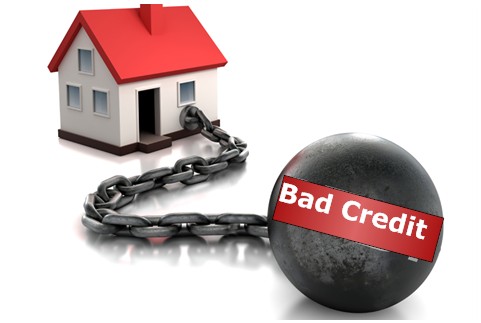 So, only about 10,45 million South Africans have credit that is in good standing. With a population of 50,5 million - of which about 18.5 million are under 18 - we have an adult population of 32 million. Of these 32 million only 10,45 million have access to credit - that is about one third. Two thirds is entirely excluded from credit.
Now - what do you need credit for? Anything from buying a car to buying a house/apartment. Although, currently, in South Africa, people have more and more started paying for daily expenditures such as food and clothing through credit as well.
Now - from those whose credit is in good standing - we have to remember that only a fraction of that segment will be able to actually afford something like a car or a house, because to have good credit doesn't mean that one has a income high enough to be able to get a loan or a bond large enough to be able to buy such things as cars and houses. So - we halve that amount - then we end up with 5,28 million adult South African citizens who can afford to buy a house or a car.
To have a house or an apartment is not a luxury - it's a basic necessity - everyone household should own one. Currently less than 10% of the South African population is capable of buying a house - one that isn't made of mud and sticks.
So - how is it that we think it is okay to have a market force decide on the distribution of something as necessary as housing? Where we end up with only a 5th of the population having access to the funds to buy a house?
If this is what we as a people think to be an effective way of distributing the goods and services that exist among the population - then yes, by all means - let's continue with what we have. But if you as I see the ludicrousness in this situation - then I suggest you investigate Equal Money Capitalism as an alternative way of distributing resources. A way where every household is guaranteed to have a house - lol, at least, then it would make sense to call it a 'household'.

-- Michelle Dickens, A Disguised Threat, The Witness, p. 13. 06 April 2013.
So, only about 10,45 million South Africans have credit that is in good standing. With a population of 50,5 million - of which about 18.5 million are under 18 - we have an adult population of 32 million. Of these 32 million only 10,45 million have access to credit - that is about one third. Two thirds is entirely excluded from credit.Now - what do you need credit for? Anything from buying a car to buying a house/apartment. Although, currently, in South Africa, people have more and more started paying for daily expenditures such as food and clothing through credit as well.
Now - from those whose credit is in good standing - we have to remember that only a fraction of that segment will be able to actually afford something like a car or a house, because to have good credit doesn't mean that one has a income high enough to be able to get a loan or a bond large enough to be able to buy such things as cars and houses. So - we halve that amount - then we end up with 5,28 million adult South African citizens who can afford to buy a house or a car.
To have a house or an apartment is not a luxury - it's a basic necessity - everyone household should own one. Currently less than 10% of the South African population is capable of buying a house - one that isn't made of mud and sticks.
So - how is it that we think it is okay to have a market force decide on the distribution of something as necessary as housing? Where we end up with only a 5th of the population having access to the funds to buy a house?
If this is what we as a people think to be an effective way of distributing the goods and services that exist among the population - then yes, by all means - let's continue with what we have. But if you as I see the ludicrousness in this situation - then I suggest you investigate Equal Money Capitalism as an alternative way of distributing resources. A way where every household is guaranteed to have a house - lol, at least, then it would make sense to call it a 'household'.


06 February 2013
Day 186: The Invisible Hand is Invisible because it Doesn't Exist - Equal Money Capitalism and Providing Results that are Best for All
When then confronted with the obvious failures of the current economic system, where so many are living below the poverty line (which by the way doesn't mean that only those people are poor), where crime runs rampant, where half the population can't even read or write - if we point those things out to economists, they'll point fingers at the government - saying - well, yes - that's because the market isn't allowed to freely operate. You have the government officials who fuck things up.
So - what's the deal with the government? Where the economic principles impulse individuals to act in their own self-interest, government officials are supposed to act in a way that is best for society as a whole. What needs to be understood, though - is that politicians form part of the very same economic system - they don't stand 'outside' of it - and so, they as well are being impulsed to act in their own self-interest - in fact, they are following the rules of the game of capitalism as it currently exists - the rules that free market economists like to defend so much. So - how can you point fingers at the government for not doing their job effectively, when they are actually doing exactly what you ask of them.
What free market economists will argue is that the free market must be allowed to just reign freely - and that the government really has no business interfering. But, I mean - isn't the very purpose of the government to correct market failures? There really is no other function for government - AT ALL. The origin of government is the realization that there's people who suffer if the market has free reign.
So - the entire philosophy - which is really just a belief - is completely debunked by practical reality. You can't argue your way out of this. So - having tried the idea that if you act in your own self-interest, you manifest a world that's best for all and seeing how it just doesn't work - the common sensical thing to do is to stop an economic system that is build on this philosophy - and to, instead, develop an economy that is based on the principle of: If you act in a way that is best for all, you automatically manifest the best solution for yourself as well. Considering that the world is a closed system and that we are not separate from the environment we live in - it makes sense to support the system as a whole in the most effective way - as this will ensure that we live in the healthiest and most supportive environment on an individual level. It is the most simplest common sensical truth that if you lift up society as a whole - you lift up each one that is part of society as well.
Equal Money Capitalism is the proposed economic system that is built upon and aligned with the principle of doing what's best for all, from which flows what is best for each one individually. To read more about this economic system, consult the blog-posts on the Equal Money Capitalism page of this blog: http://economistjourneytolife.blogspot.com/p/emc.html#.URKuI_JBnTo.


Subscribe to:
Posts (Atom)




