Have you Ever been Swept Off Your Feet?

In both cases – whether the bubble was inflated with positive or negative energy – the participants in the bubble are being swept away further and further away from actual physical reality and start to see everything either ‘extremely negatively’ or ‘extremely positively’ – neither experience is grounded in reality – because the physical is neither positive or negative – it just is what it is.

And Then You Crash – Meconomics

In this little series, we’ve been investigating the phenomenon of inflation, how we in our daily lives participate in ‘inflating our reality’ and so, how we are on a personal level participating in the same principles/dynamics that we see playing out on a bigger scale when it comes to inflation, speculative bubbles and financial market crashes.

Welcoming New Life with Living Income Guaranteed

Comfort, security and nurturing are all things we wish are present when a baby comes into this world. Yet, these conditions are not a reality for many babies, as parents themselves like these things in their lives. In Pietermaritzburg, the capital of KwaZulu Natal province in South Africa, 3 to 5 babies are…

Humanity Washed Ashore

This was an excerpt of just one of the stories about the boy. Over the last few days, dozens have been written and published on various major news sites. What is more striking than the content of the posts, is the comments that are left on these articles. What is humanity’s response to such images, to such news?

Voting Fun – What does it Feel Like to Have a Say?

Now – before such increased direct political participation is a reality – let’s do a little test to see what it feels like. So – here are some mock-questions where you’re asked to give your input. Imagine that this relates to your direct reality (eg. your town) – and your answer has a weight that influences the outcome of the decision. Of course, in reality…

Showing posts with label consumerism. Show all posts

30 May 2015

Meconomics: Do you Spend your Money Objectively or Subjectively?

This post is a continuation to:

Meconomics: I need my Wants and Want my Needs to be Satisfied
Meconomics: Wants and Needs in your Daily Living

In my previous post I started looking at how wants and needs are confused in our daily living. Needs would be the things you cannot go without and so, common sensically, they would be your priority when deciding what to spend your money on. Wants are things you can go without, but you would prefer not to. Often we lose sight of this distinction – where we will forget about or compromise on our needs to fulfil a want. Then we looked at the following:

“Most of the time, we don’t feel needs or are even aware of our needs, it is only when we lack our basic needs that we suddenly start being affected by them, first on a physical level – and if we see we can’t satisfy our needs, we’ll go into anxiety, stress and survival-mode. But when our needs are being met – they are ‘silent’ and go unnoticed, we feel they don’t really ‘add’ anything to our lives, because we have taken them for granted as just being a part of our daily living.

Desires on the other hand – do give us an energetic thrill or rush. We feel better thinking about our desires and fulfilling/satisfying them, we look forward to fulfilling them, they occupy our minds and lead us to daydreaming, they make us feel hopeful that we/our lives will be better once we satisfy them.”

We’ve been hardwired to lean towards positive experiences, so with the insight that we’ve given wants a positive connotation and needs a negative or neutral connotation – it is easy to see how we can experience wants as an overriding factor on a subjective level. Objectively – we can all quite easily understand that needs come before wants and that satisfying wants is secondary to satisfying needs – but on a subjective level – the level where energetic experiences, emotions and feelings determine what we value and think is important – the opposite is true: wants are more interesting, because they ‘give us’ more pleasant experiences than needs.

So – the problem doesn’t seem to be our rational understanding of needs and wants – but rather that our subjective experiences can in a moment cloud what is most important. A person can for instance make a budget plan, intending to have sufficient funds set aside to pay off bills throughout the month in consideration and understanding of the importance of doing so and the consequences of not doing so – and yet, can in a moment indulge in an enticing want, that ends up compromising the person's available funds at the end of the month. Because in that one moment – when the desire is experienced – the decision is influenced by the subjective experience that comes with fulfilling a want – objective rationality is denounced in the name of a feeling. Some might be able to relate to such moments more than others, as it will depend on your own relationship to your feelings and emotions  - to what extent you place value in them / to what extend you include momentary experiences in decision making.

Here we can also highlight another dimension that plays a role in deciding what to spend your money on – which is: time. Objectively – we know that if we don’t plan ahead to ensure we have enough funds to cover our needs – be it certain or uncertain ones (for instance, having savings for unexpected medical emergencies) – we will come to a point in time where we will not have enough and be in trouble. Yet – subjectively – short-term gratification can override long-term satisfaction – where we will be willing to ‘risk’ not having enough funds later on, to be able to indulge in a satisfying a want in the present moment. This often goes hand in hand with an idea that there is ‘time’ to figure things out and find another solution for the problem we are about to create later down the line – and also, unfortunately, often goes hand in hand with regret when we get to that later moment and realize: we got something we desired in that moment, but didn’t actually have alternatives/magical solutions to sort out/generate other funds to cover the need.

So – we have looked at how wants can in a moment override a need – where we identified subjective experiences and time as important players – but we can look a bit further and ask: why does it sometimes feel like we ‘NEEEED’ the things that we ACTUALLY don’t need. Objectively speaking – they are wants, things you can go without – and yet, you can experience a sense of ‘urgency’ and ‘must have’ and ‘I need it’ towards that which you want. Now wants really start messing with your sense of priority, lol. It’s one thing to be clear on the fact that what you are enticed by in a moment is not something you truly need, but you want to indulge yourself anyway – it’s another to feel like you actually NEED it when you don’t.

Let’s look at that dimension more closely in the next post.

12 May 2015

Meconomics: I Want my Needs and Need my Wants to be Satisfied

The economic problem – the corner stone of economic theory – is defined as the satisfaction of unlimited wants and needs in a world with finite/limited physical resources. This implies that not all wants and needs can be satisfied, so the questions economic models attempt to answer are: How is it decided which wants and needs will be satisfied? How is it decided whose wants and needs will be satisfied? In our world today – the answer is: “those who can pay for the satisfaction of their wants and needs will see them satisfied, those who can’t pay for it – well, sorry, we have to draw the line somewhere”.

As I was reading about the economic problem for the first time – I found it fascinating that they used the words ‘wants’ and ‘needs’ in the same way and treated them as one term – like this: ‘wants&needs’ – lol. The difference between wants and needs was briefly explained, but then both words were thrown under the ‘wants&needs’ banner – as though ‘needs’ carry the same characteristics as ‘wants’ and ‘wants’ carry the same characteristics as ‘needs’. When you approach the economic problem by reading the words ‘wants’ and ‘needs’ as ‘wants&needs’ - then the world as it is today might make sense to you – then the economic problem might actually be a justification for the desolation and lack in which millions live. Perhaps that is how economists want us to read the words, so that we won’t hold them accountable for not yet having come up with a better solution.

‘Wants’ and ‘needs’, however, are two very different things. ‘Needs’ are things you NEED – that you cannot go without or you will be physically and emotionally compromised. ‘Wants’ are things you WANT – they go beyond what you ‘need’ – you can go without, but you would like or prefer to experience them or have them in your life. It is true to say that if you tally up all the individual wants of all the people on the planet – you will end up with ‘unlimited wants’. The same is not true for needs, however – there are certain things no human being can go without – say food, water, shelter, social interaction, medical support – where this is the same for every single person by virtue of them being ‘a human’ – and where for some, dependent on personal situations and circumstances, the list is expanded to include a few other things as well.

Considering that needs are limited – we may actually be able to satisfy the needs of all the human beings on the planet – and it is known that we can. So – instead of trying to work with ‘wants&needs’ where the task seems impossible and full of ‘sorry’s, we have to draw the line somewhere’ – we could start with the part that IS possible – satisfying everyone’s needs – and only then design an additional system or model that draws lines for ‘wants’. Our current model is one where some are able to satisfy all their needs and most of their wants, while others are not supported in their basic needs – which, you have to admit, is quite an insane situation. Part of why this is allowed is due to… ‘wants&needs’.

Now – this blog is part of my ‘Meconomics’ series – so you can already guess where I am taking this discussion next… For this situation to be as it is – with so few raising their voice and spurring into action to change the status quo – I started wondering how the same point exists within ourselves. The same point, meaning: do we in fact have a clear understanding of the difference between ‘wants’ and ‘needs’ inside ourselves and do we approach ‘wants’ and ‘needs’ appropriately in our own personal lives?

True story: Earlier as I was writing this blog and came to the section of clarifying the words ‘wants’ and ‘needs’ – I first took the easy route of simply looking up the words in the dictionary and copy/pasting the definitions in my blog. But! I couldn’t use those definitions, because they would have perpetuated the confusion between the words rather than clarifying the difference between them. Have a look:


If the dictionary uses the word ‘want’ to clarify the word ‘need’ and uses the word ‘need’ to clarify the word ‘want’ – we can be sure we’re on to something. Does this mean that wants simply imply needs and that needs imply wants – because the dictionary says so? No. Remember, dictionaries will reflect our own language usage – so if the word ‘want’ has been used over time to indicate a ‘need’ – then it becomes an ‘accepted use of the word’ and is reflected in the dictionary as such. In the same way, the word ‘need’ has been used to describe ‘wants’ – and so it has become ‘normal’. What the dictionary then shows is how we have confused the meanings of the words ‘wants’ and ‘needs’ for ourselves and started using the terms as synonyms.

In my next blog I will continue exploring how the ‘merging’ of the words ‘wants’ and ‘needs’ as ‘wants&needs’ affects and influences us on a personal level so that we can get a better understanding of the world as it exists today within the principle 'as above, so below'.

05 November 2014

Transcending False Dilemmas with Living Income Guaranteed – Part 4 – Abundance of choice vs Sustainability

This post is a continuation to the blog-posts:

Transcending False Dilemmas with Living Income Guaranteed – Part 1
Transcending False Dilemmas with Living Income Guaranteed – Part 2 – Sustainability vs Full Employment
Transcending False Dilemmas with Living Income Guaranteed – Part 3 – Tools of Intervention

Please read them first for context.

Example 4

‘We’ve created a society with an abundance of choices and so freedom to choose. Producing so many varieties of the same product places pressure on the environment, but reducing it would mean to give up the freedom we’ve gained.’

We all like to have options and choices – being able to ‘choose for ourselves’ which product we buy – the one that suits our needs just a little better, the one that has the specific features we are looking for. When we are not satisfied with a particular service, we like knowing that there are alternative providers of the same service and that we are not stuck with the only service provider.

Choices and options give u a sense of freedom, a sense of self-determination. So, it would seem that the more options we have available to choose from, the more freedom we have, the happier we are. And so, it would also seem that with the amount of choices we enjoy in our western consumerist lifestyle, we must have reached a state of absolute freedom. But have we?

Barry Schwartz did an excellent TED Talk presentation about this very topic and I will quote some of the key points he brought up as a quick summary – for the full presentation, click here.

“The official dogma runs like this: if we are interested in maximizing the welfare of our citizens, the way to do that is to maximize individual freedom. The reason for this is both that freedom is in and of itself good, valuable, worthwhile, essential to being human. And because if people have freedom, then each of us can act on our own to do the things that will maximize our welfare, and no one has to decide on our behalf. The way to maximize freedom is to maximize choice. The more choice people have, the more freedom they have, and the more freedom they have, the more welfare they have. This, I think, is so deeply embedded in the water supply that it wouldn't occur to anyone to question it.”

“We all know what's good about it, so I'm going to talk about what's bad about it. All of this choice has two effects, two negative effects on people.”

“One effect, paradoxically, is that it produces paralysis, rather than liberation. With so many options to choose from, people find it very difficult to choose at all.”

“The second effect is that even if we manage to overcome the paralysis and make a choice, we end up less satisfied with the result of the choice than we would be if we had fewer options to choose from. And there are several reasons for this. One of them is that with a lot of different salad dressings to choose from, if you buy one, and it's not perfect […] it's easy to imagine that you could have made a different choice that would have been better. And what happens is this imagined alternative induces you to regret the decision you made, and this regret subtracts from the satisfaction you get out of the decision you made, even if it was a good decision. The more options there are, the easier it is to regret anything at all that is disappointing about the option that you chose.

Second, what economists call "opportunity costs." Dan Gilbert made a big point this morning of talking about how much the way in which we value things depends on what we compare them to. Well, when there are lots of alternatives to consider, it is easy to imagine the attractive features of alternatives that you reject, that make you less satisfied with the alternative that you've chosen.”

“Opportunity costs subtract from the satisfaction we get out of what we choose, even when what we choose is terrific. And the more options there are to consider, the more attractive features of these options are going to be reflected by us as opportunity costs.”

“Third: escalation of expectations. This hit me when I went to replace my jeans. I wear jeans almost all the time. And there was a time when jeans came in one flavor, and you bought them, and they fit like crap, and they were incredibly uncomfortable, and if you wore them long enough and washed them enough times, they started to feel OK. So I went to replace my jeans after years and years of wearing these old ones, and I said, you know, "I want a pair of jeans. Here's my size." And the shopkeeper said, "Do you want slim fit, easy fit, relaxed fit? You want button fly or zipper fly? You want stonewashed or acid-washed? Do you want them distressed? You want boot cut, you want tapered, blah blah blah ..." On and on he went. My jaw dropped, and after I recovered, I said, "I want the kind that used to be the only kind.
He had no idea what that was, so I spent an hour trying on all these damn jeans, and I walked out of the store -- truth! -- with the best-fitting jeans I had ever had. I did better. All this choice made it possible for me to do better. But I felt worse. Why? I wrote a whole book to try to explain this to myself.  The reason I felt worse is that, with all of these options available, my expectations about how good a pair of jeans should be went up. I had very low -- I had no particular expectations when they only came in one flavor. When they came in 100 flavors, damn it, one of them should've been perfect. And what I got was good, but it wasn't perfect. And so I compared what I got to what I expected, and what I got was disappointing in comparison to what I expected. Adding options to people's lives can't help but increase the expectations people have about how good those options will be. And what that's going to produce is less satisfaction with results, even when they're good results.”

“Finally, one consequence of buying a bad-fitting pair of jeans when there is only one kind to buy is that when you are dissatisfied, and you ask why, who's responsible, the answer is clear: the world is responsible. What could you do? When there are hundreds of different styles of jeans available, and you buy one that is disappointing, and you ask why, who's responsible? It is equally clear that the answer to the question is you. You could have done better. With a hundred different kinds of jeans on display, there is no excuse for failure. And so when people make decisions, and even though the results of the decisions are good, they feel disappointed about them; they blame themselves.
Clinical depression has exploded in the industrial world in the last generation. I believe a significant -- not the only, but a significant -- contributor to this explosion of depression, and also suicide, is that people have experiences that are disappointing because their standards are so high, and then when they have to explain these experiences to themselves, they think they're at fault.”

As with so many things in life, when we see something as beneficial, we have the tendency of overdoing it and pulling it to the extreme only to realize how that creates other adverse effects and we have to reign ourselves in a again. Sleep is good – it is a vital part of life and required for the body to rejuvenate – but sleep too much and you’re just wasting time. Chocolate is good, it is one of those substances that can give great pleasure – but eat too much of it and your face will be plagued with zits. With all such things – the key is to add the magic words ‘in moderation’: Sleep is good… in moderation. Chocolate is good… in moderation. Having choices is good… in moderation.

So, looking again at the original statement that we have to choose between either freedom through an abundance of choices – and sustainability in refraining from utilizing resources that no one actually needs – we can now clearly see that this is a very ‘black and white’ representation of the story, leaving out important considerations. In understanding that yes, some choice is better than no choice, but too much choice is worse than some choice – we are able to pursue both freedom and sustainability –they are not mutually exclusive.

To this end, we suggest in the Living Income Proposal that before new products and services are produced and made available on the market, it must first be proven that there exists an actual genuine demand for it: that it is something people are asking for – and not merely the same product or service of which there already exists a multitude of options to choose from, only to then create the demand through marketing and advertisement.

27 June 2013

Day 237: Planned Obsolescence becomes Obsolete with Living Income Guaranteed

brian-fitzgerald_cc-by During the war as countries no longer had access to their usual trading routes through obstruction like blockades and disrupted commercial agreements, industries had to start making the same things with inferior materials, simply because the usual materials which would ensure quality and durability were out of reach.

As time progressed, an interesting thing was noted. People who bought the products for which inferior materials were used, ended up having to buy the product again after a shorter period of time than what they were previously used to. While the use of inferior materials and the shorter life-span of goods was supposed to be a ‘negative side-effect’ of the war, it turned out to boost the economy as more people were forced to buy more goods to sustain their lifestyle.  After the connection was made between the inferior materials and diminished durability of goods leading to increased economic activity, it was made to be ‘a thing’.

People now started playing around and testing various materials and inputs and their durability within products to design and engineer goods with calculated life-spans. The use of inferior materials and diminished durability was no longer seen to be ‘unfavorable’, but necessary evils which our business men must employ to ensure the vitality and longevity of the economy. Planned obsolescence, had become an ethical thing to do.

Along with it, came also a culture of disposability. You could now use plastic cups, and plastic bags which you use once and then throw away. So that you can just keep on buying and disposing = it’s great for the economy!

While these manifestations may be ‘good for the economy’ in terms of manipulating consumers into extensive buying behavior, these manifestations by themselves obviously also bear great negative side-effects to the world outside of the economy. Re-producing the same products over and over simply to keep the buying going results in massive amounts of waste. Not only are we wasting tons of energy which we could have used more productively, we also end up with huge amounts of waste which accumulate in landfills and oceans. So while the economy may ‘thrive’, we are slowly but surely putting pressure on all other parts and areas of our society.

People are being put pressure on as they have to budget more carefully as goods who used to be once durable are getting a shorter and shorter life-span. What used to be a onetime big investment for which one had to go into debt, is now becoming a pattern where more people are living in debt and what they are receiving in return is of lesser and lesser quality.

Nature and the animal kingdom are being put pressure on as we pollute the environment and seize their habits for expanded production.

Our resources are being put pressure on as we exploit them at an unsustainable rate where they will soon be exhausted before we have put into place alternatives.

So all in all, the price we pay for our economy to thrive through planned obsolescence, is just not worth.

With the implementation of a Living Income Guaranteed as presented by the Equal Life Foundation, planned obsolescence itself will become obsolete within the economy.

Currently, we are placing our focus on ‘things’ to guarantee our spending, and thus to guarantee the spinning of the economic wheel. This, as we have seen, is simply ineffective and wasteful. Instead, it would make more sense to ensure spending by firstly ensuring that everyone has some level of purchasing power through having a Living Income Guaranteed in place, and secondly through placing our focus on human capital rather than repetitive buying patterns.

This practically implies that instead of depending on things to break for consumers to spend money in the economy, we move our focus to appreciating and rewarding human labour adequately and properly. This means that we can revert back a high standard of quality and durability, with prices that accurately reflect the amount of human labour that went into the product, so that we can establish wages from which people can live a dignified life.

At the moment, we are counting on low quality level goods and low quality standards of living through low wages for the economy to keep going. It does not have to be this way. If we re-arrange our values and priorities, we can still keep our economy going, but we can do it by directing our attention (and money) to quality, durability and human dignity.

Enhanced by Zemanta

22 April 2013

Day 216: Children Seduced to Spend Real Money on Games


"A schoolboy has unwittingly racked up a £2,000 credit card bill playing an online game on his grandfather’s iPad.

Six-year-old Will Smith was innocently playing the popular children’s video game Tiny Monsters until his grandfather Barry Slatter, 55, was contacted by the fraud squad.

The family was unaware of little Will’s huge spending spree until his grandmother tried to use the credit card at Tesco, only to have it declined."

Read more: http://www.dailymail.co.uk/news/article-2205555/Schoolboy-massive-credit-card-playing-iPad-Tiny-Monsters-app.html#ixzz2RDDz9inE

"A 12-year-old boy accidentally ran up a £1,500 bill while playing Xbox Live - leaving his cash-strapped dad with no choice but to pick up the tab.

Sam Ghera's son Nik thought he was using up game points every time he 'improved' his characters while playing Call of Duty and Fifa.

However, with each click he was actually purchasing an online currency - which was draining money from his dad's account."

Read more: http://www.dailymail.co.uk/news/article-2171930/X-Box-Live-Boy-playing-Call-Duty-Fifa-ran-1-150-bill.html#ixzz2RDEEp7N7

More and more children's video games provide the option to buy additional features or short-cuts in the games with real money. Many of these games work with virtual currency as part of the game, but then switch to ask for real money for certain purchases. No need to say that children have a tendency to mix up imagination with reality. The difference between the two is simply not very obvious to them. Especially, when we're looking at Gaming Apps on touchscreen devices - where the characters of the game can actually be touched and moved by their finger. So - to expect a child to understand the difference between virtual money and real money - where real money is nothing more than numbers on a screen in the first place - is quite far-reaching.

So, what is the deal with these games where it is extremely easy for children to make real purchases on their parents' account? Are they trying to trick children to purchases they don't realize they're making - having children give money to a company - money which isn't even theirs? Having children doing the stealing for the company? Or is it about molding children to become the future generation of consumers? Where they learn to spend virtual money in a game and find that it is so easy - but then, as soon as real money comes in the picture, the parents deny them the right to buy what they want with real money. Then the child holds a grudge and they promise themselves that as soon as they have their own money, of which they can decide how they want to spend it - that they will always buy whatever they want to buy - creating the perfectly manipulable consumer. Because then, all that needs to be done is to spark a desire - and there you have it, an eager buyer.

Here is another example:

"Facebook has been accused of creating ‘tomorrow’s generation of problem gamblers’ by rolling out real money casino games.

Under a lucrative deal with online gaming company 888, the social networking giant will offer Las Vegas-style slot machines and games such as roulette and blackjack.

The move heralds a major expansion of its gambling sites.

Gamers will be able to place up to £500 on bets using a credit or debit card with promises of jackpots worth tens of thousands of pounds.

These will only be available in the UK, where gaming laws are more relaxed than in the US. Both Facebook and 888 insist they have safeguards to prevent minors from accessing the games.

These include checking the credit card details used against both their Facebook profile and the electoral register.

But there is nothing to stop children logging on to parents’ accounts and using card details already stored on the family computer. Already, Facebook users as young as 13 can use virtual slot machines on the website to win ‘credits’ – which have no monetary value.

But as soon as they turn 18, millions of children who use the social networking site will be bombarded with adverts for real money gambling games.

Facebook has three million UK users aged between 13 and 17. But a further one million are thought to be under 13 and pretending to be older.

Any of these could already be playing the ‘free’ slot and bingo games – which critics say form gambling habits because they simulate the thrill of hitting the jackpot.

More than a million people are already signed up to play 888’s free bingo game Bingo Island – although not all of these are UK based. They have to pay for online credits to play, but cannot win any real money back.
Concern: Critics worry users, including children using parents credit card details, will get hooked on the casino-style games

Yesterday 888 launched its first real money bingo application, with promises to roll out casino games. Critics fear many will be attracted to the new games to try to win money back, after experiencing the unrealistic odds offered on the free versions.

‘You win virtually every time you play one of the free games,’ said Mark Griffiths, professor of gambling studies at Nottingham Trent University.

‘Research has shown again and again that one of the biggest factors in developing problem gambling is playing free games online first. These children and teenagers today are the problem gamblers of tomorrow.’

He warned the deal with 888 could cause ‘the floodgates to open’ as gambling companies dive into the social media frenzy to make money. It is thought Facebook will take a 30 per cent cut of all bets placed.

In August, Facebook launched its first ‘real money’ gambling game with Bingo Friendzy, which offers bingo and slot machines. But the deal, done with Gamesys Group, is relatively small compared with the potential influx of gambling giants who could queue up to join Facebook if the venture proves to be profitable.

Itai Frieberger, chief operating officer of 888, said: ‘Our Facebook play for fun offerings have found a significant audience, and we are very excited by the opportunity real money gaming on Facebook provides.’ He said the company would prevent users who are under 18 on Facebook from even seeing the games.

A spokesman for Facebook said Bingo Friendzy players are subject to ‘strict account acceptance controls verifying their identity, and that they are over 18 and located in the UK.’ Gambling will not be promoted to Facebook members registered as under 18, it added.

Any of these could already be playing the ‘free’ slot and bingo games – which critics say form gambling habits because they simulate the thrill of hitting the jackpot."

Read more: http://www.dailymail.co.uk/news/article-2247087/Fury-Facebook-online-casinos-Social-network-tempting-young-gamble-new-betting-games.html#ixzz2RDWYaO3H

If capitalism, as it says, is all about the freedom of the individual and about making your own choices - then how come an army of consumer-addicts is being created?
Enhanced by Zemanta

15 July 2012

Day 44: Homo Economicus & The Invisible Hand - Part 2

 See Day 43: Homo Economicus & The Invisible Hand for Context

I forgive myself that I have accepted and allowed myself to have defined 'rationality' as the ability of only behaving and acting within a way which maximizes personal utility within self-interest

I forgive myself that I haven't accepted and allowed myself to ever question the definition of 'rationality' within the context of the human and the role of the human within the economic system -- as I have never accepted and allowed myself to question my own self-interest and whether serving and pursuing this self-interest is in fact of any value and worthwhile pursuing within the context of what is Best for All

I forgive myself that I have accepted and allowed myself to define and characterize the human as being a 'rational' being -- where I have accepted and allowed myself to believe that this 'rationality' gives the human as a being a higher status than for instance animals -- and within that I forgive myself that I haven't accepted and allowed myself to see and realise that everything is in reverse -- where the animal is in fact superior to the human for being able to consider others besides oneself, but where we've accepted and allowed ourselves to see 'caring about others' as weak and standing in the way of survival -- so we rather put up a tough front and present ourselves all 'rational' as if this rationality has any value, while it doesn't -- as this type of rationality as self-centered behaviour only accentuates how limited we've accepted and allowed ourselves to be and become, where we've become these 'one-track-minded' beings who only care about their own self-interest and do not care about the consequences which result from pursuing one's self interest -- and believe that there is no way that we can all work together

I forgive myself that I have accepted and allowed myself to believe that the human is special in comparison to other Life Forms on Earth such as animals and plants -- and since I believe myself as a human to be special, our self-centered, egotistical, selfish behaviour must be special -- and thus this self-interested tendency ought to be cherished and used as a guideline for how things are done in this world, since I have accepted and allowed  myself to believe that I am a human and the Universe revolves around me, and everything which exists is here for me to use as I please within my Pursuit of Happiness -- and thus I forgive myself that I haven't accepted and allowed myself to stand still for a moment and look/investigate how my actions within pursuing my goal as satisfying my self interest is harming/affecting others, as I have accepted and allowed myself to have been blinded by the light of my own perceived specialness

I forgive myself that I have accepted and allowed myself to believe that us humans are perfect just the way we are -- God created us this way, so we must be perfect, so we must act upon our nature -- and within that I forgive myself that I have accepted and allowed myself to take human nature for granted -- where I have never ever accepted and allowed myself to really look at what it is we as humans exist as and how our nature affects the Entire Earth -- as otherwise I would have seen that this nature is in fact nasty, as it only cares about itself and nothing and no-one else

I forgive myself that I haven't accepted and allowed myself to look beyond my preconceived ideas about what it is 'to be human' where I took our very nature as self-interested beings completely for granted, and used it without questioning as the measuring stick for everything and everyone in this world -- where everything has been assigned value according to our wants, needs and desires within self-interest within the belief that we are the center of the Universe and that we are perfect by default

I forgive myself that I haven't accepted and allowed myself to see and realise that the world and the state it currently exists within and as, would not have been brought about by 'perfect' beings -- and so, it must be that we are imperfect beings -- who require to correct and change themselves to a form of perfection as Responsibility towards all Life -- so we can sort out the mess we've created in our Delusion of self Grandeur

I forgive myself that I have accepted and allowed the definition/characterization of the human as inherently self-interested

I forgive myself that I haven't accepted and allowed myself to see and realise that we as humans do not have to live by this characterization -- but that we can change our nature to whatever it is we want it to be, and thus it would make the most sense to change our nature to What is Best for All -- as this would be starting point/principle which will bring about the best possible version of this reality, where no-one has to suffer and where all are taken care of equally!

I forgive myself that I have accepted and allowed myself to not question the nature of the human, and instead use this nature as the starting point for our economic system -- where all systems and structures are built around this one point: people will do what will serve them and only them best -- and where incentives as manipulation are put into place to direct the activity of humans towards what the Leaders within this world think is best -- but now, these Leaders are also just self-interested selfish beings, so obviously they are going to put structures and incentives in place which will serve them best! And so the illusion of choice is created where apparently the ordinary man on the street has a 'choice' in what he/she can do -- and where he/she will always opt for what suits him/herself best -- without seeing and realising that this is not real Free Choice as the options which had been made available, were carefully selected by the Leaders and presented in such a way that you will do what you think is best for you, but only within that limited window of choice which had been demarcated for you, so it is not really what is best or what you want , but only that which was best within that moment within the options available, the options which were made available to you -- and is thus in fact very limited, and where these choices will always end up serving the interest of the leaders while giving you the illusion that you are also serving your own self-interest, and can have the experience of being a 'winner'-- without seeing or realising what actually goes on in terms of the bigger picture/game at play -- but we won't care and so we won't see because we believed we got ourselves 'the best deal'

I forgive myself that I haven't accepted and allowed myself to see and realise, that the current economic system clearly confirms that the human is but an organic robot -- and if you push the right buttons / provide the right input / incentives -- they will do exactly that which you want them to do

I forgive myself that I haven't accepted and allowed myself to see and realise that the Invisible Hand theory is flawed, as one's self-interest can only bring about a world that's Best for All if everyone has the same point of self-interest and where we all agree on this One point as what matters is that which is Best for All -- but we don't agree on this and only care about our own self-interest and what we think is RIGHT, and everyone else is WRONG and I'm not going to cooperate with anyone who has a different view on things than me, because I am right and I am better, they are wrong, they are less -- why should I care about them and their wellbeing?!

I forgive myself that I haven't accepted and allowed myself to see and realise that the Invisible Hand theory can only work if everyone gets the fuck out of their egos and agrees on what really matters as the physical dimension of this reality which we all share and are bound by -- within the realisation that we only have this one Home as Earth which we all share, and if we share Earth unequally everyone is going to be affected in a way that's not Best for All -- so we should share the Earth in a responsible way where none are left out and all are taken care of because we want to be taken care of and so we shouldn't create a world where others are in positions which we would not want to be in -- where there are currently MORE positions within the world that we DON'T want to live than there are positions that we DO want to live -- which clearly indicates that we have a lot of work ahead of us to sort out this Mess we've created so we can all live a Life which everyone can enjoy

17 June 2012

Day 21: Consumerism: Exploit Thy Neighbour for Thy Self

I forgive myself that I haven't accepted and allowed myself to see and realise that it requires four to six hectares of land to maintain the consumption level of the average person from a high-consumption country -- while the Earth is not practically, physically able to provide this for everyone -- where two decades ago we were at a point where there were only 1.7 hectares of ecologically productive land for each person  -- and within this I forgive myself that I haven’t accepted and allowed myself to design an economic system which supports a sustainable life style and not a life style which only sustains a few in abundance while a majority suffer and starve

I forgive myself that I haven’t accepted and allowed myself to see and realise that capitalism in its present form can only work as long as we keep on producing, selling and consuming – and within this I forgive myself that I have accepted and allowed myself to have defined terms such as “growth”, “prosperity” and “advancement” within the limited framework of how much a society is producing and selling

I forgive myself that I haven’t accepted and allowed myself to see and realise that using concepts such as GDP and GNI to measure and indicate economic prosperity within a society only reflects the success of the society as a consumer – not as a society of living beings

I forgive myself that I have accepted and allowed myself to have created an unsustainable economic system of over consumption of the few at the expense of the majority where the few rich will prey on the land of the weak/poor and seize their resources for the personal gain of the few, leaving even less for those who need it most

I forgive myself that I haven’t accepted and allowed myself to see and realise that within making consumerism/consumption the sole purpose/reason within one’s life on earth we are in fact misusing and abusing the earth and it’s natural resources to satisfy a fantasy which cannot be fulfilled – as there is always more to consume and newer things to buy – in fact contributing to poverty and hunger as resources are ineffectively and unequally distributed to those with money only

I forgive myself that I haven’t accepted and allowed myself to see and realise that our consumption lifestyle is moving land ownership into the hands of a few – where large corporations take over and swallow smaller ones resulting in job losses and the migration of people to the cities looking and hoping for better jobs which results in more slum areas, health problems, increased crime etc – or where in the case of agricultural takeover, the landless will move to less arable land which may conflict with wildlife, or moving into forests causing deforestation and disturb the natural habitat of wildlife – all as a ripple effect of our consumption behaviour and need to buy and have more

I forgive myself that I have accepted and allowed myself to have created and imposed an economic system within this world which promotes consumerism at all end – which results in millions of acres of land being misused and directed towards non-productive luxury  goods for the wealthy while millions suffer and starve in a world of plenty

I forgive myself that I have accepted and allowed myself to have created a world economic system where food and basic essentials are produced conditionally – and that this condition is MONEY – and if you do not have money you cannot have these essentials – which is in fact a crime to Life

I forgive myself that I have accepted and allowed myself to tell the poor to do as I do and step in the footsteps of globalizations if they want to be “lifted up” into the world of consumerism – where the belief is held that “it worked for me, so it must work for you” – without seeing and realising that the reality of consumerism came about through acquiring massive amount of resources – resources which were not local but which were taken from other societies and people – those societies and people who are currently poor – where the rich took it upon themselves to Exploit Thy Neighbour for Thy Gain – which implies that if the poor should follow the footsteps of the rich, they should invade the land of the rich and take what it is they need and place the rich in an inferior position –  only reversing the roles – which is obviously not a real solution as it merely switches the tables around without in fact changing the problem with a solution that is Bestfor All as Love Thy Neighbour as Thyself

I forgive myself that I haven’t accepted and allowed myself to consider the outflows and consequences which follow from a lifestyle of consumption – as consumption is linked in with pollution and if we consume at a unsustainable level we produce pollution at an unsustainable level  -- revealing and showing how the human has placed more value in money as energy as delightful experiences within the Mind at the expense of the Physical Body as the Earth suffering the consequences of our idiocy

I forgive myself that I haven’t accepted and allowed myself to see and realise that saying to poor people that “they must do as we did” is within this physical reality with the current available resources impossible – as currently 86% of the world’s resources are being consumed by the world’s wealthiest 20% -- implying that if everyone consumes at this level we need several more planet Earths which are non-existent – proving again the unsustainability of our current accepted economic system and lifestyle and showing that it is a system that is doomed to fail as it does not consider all Life in anyway whatsoever

I forgive myself that I have accepted and allowed myself to abuse the position of the poor for the gain of the rich through migrating high pollution industries to poor countries with lower environmental standards as they will do anything to have more money circulate into their economy – while the rich can continue to abuse and waste at unprecedented levels

I forgive myself that I have accepted and allowed myself to hide and cover up the harmful conditions within the world through pollution stemming forth from consumption as any increase in disease and decreasing health results in higher sales of pharmaceuticals which provide jobs and create a new form of consumption – creating the idea/belief that a society is doing better as the GDP of a country is growing while all the while living standards are declining but these are not taken into consideration as all that counts is the success and level of consumption within and through which we have defined our value as life – which is not Life in fact but a made up illusion to keep us trapped in a zombie state mode in order to not question our reality but keep us on track in our chase and Pursuit to Happiness which is never-ending as an illusion can never be achieved and made into something real

I forgive myself that I haven’t accepted and allowed myself to see and realise that Wars in are in fact waged to protect and maintain our lifestyle of consumption – as our level of consumption is unsustainable inevitably leading to the depletion of resources – where societies will fight and kill one another over resources needed to satisfy our consumption compulsion – where wars are waged for resources to be exported to the West such as coltan which is a substance needed for computer chips to function

I commit myself to change our current lifestyle pattern of consumption to a lifestyle pattern that takes into consideration what is Best for All and the designing of an economic system which is created within the consideration of REALITY instead of ILLUSION and which is actually sustainable which can provide a lifestyle which is obtainable and sustainable for ALL on Earth

I commit myself to expose the consequences and outflows stemming from the Evil of Consumerism and the impact it has on the majority of the population here on Earth

I commit myself to expose the mathematical inconsistencies within propagating and promoting consumerism as THE ULTIMATE LIFESTYLE for ALL – as this is practically unsustainable, where the promotion and promise of this lifestyle is what is keeping millions enslaved in the hope that one day they will ascend into the world of Consumers and Consumerism while this is not practically possible and is merely wishful thinking – which keeps the masses from questioning the current economic system and how it does not in fact consider and provide for everyone in a way which is Best for All

I commit myself to designing and establishing a sustainable economic system which takes into consideration All Life, as plants, animals and humans and not just the monster called Consumer

I commit myself to expose the extensive abuse done unto Earth as the Physical Body we all share in the name of consumption and the pursuit of happiness

I commit myself to expose how the policies and suggestions of the rich to the poor are unsustainable and impossible to the core – as the existence of the rich is in its very foundation dependent on the existence of the poor and as long as we allow a world where some live in abundance in the pursuit of happiness there will always be the other side of the coin where the majority live in scarcity and dismay

I commit myself to expose that a Life of Consumption is really not a Life at All but merely a life of a pre-programmed robot following its every impulse without for a moment considering who it is or what it does and how this affects others

I commit myself to wake up Consumers so they may cease being Conned and Mesmerized by Consumption and live a Life in consideration of what is Best for All

See:  Anup Shah, Effects of Consumerism, Global Issues – for more information

02 June 2012

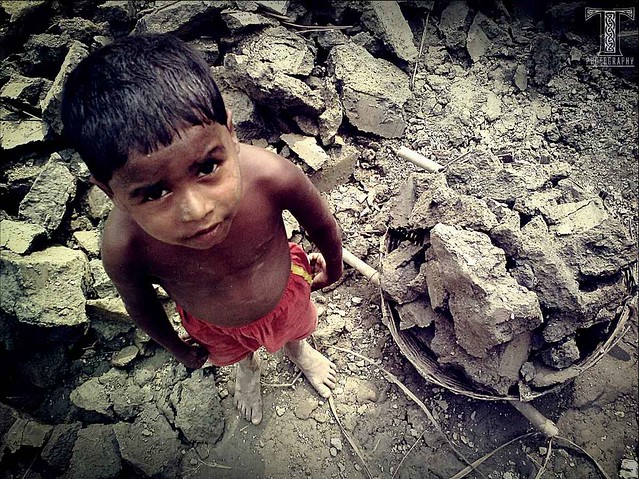
Day 7: Child Labour - To Ban or Not to Ban?

Also check out this short Documentary on Child Miners in Bolivia:
Witness - Child Miners - Part 1
Witness - Child Miners - Part 2


I forgive myself that I have accepted and allowed myself to have created the conditions within this world where children from all ages are forced to take up labour in order to survive

I forgive myself that I have accepted and allowed myself to have created the conditions within this world which place parents in a position where they are forced to send their children off into labour in order to survive as a family

I forgive myself that I have accepted and allowed myself to frown upon mothers who send their children off to work instead of sending them to school -- not seeing and realising that this choice does not in fact exist -- as it is a matter of surviving or not

I forgive myself that I have accepted and allowed myself to have created the condition in this world which force children to place themselves in harmful working conditions just to see another day

I forgive myself that I have accepted and allowed myself to have defended child labour within the framework of supply and demand -- where if children demand work and are willing to supply their factors of production at low prices, and enterprises demand labour at low prices -- then why should this not be allowed?

I forgive myself that I haven't accepted and allowed myself to see and realise that banning children within the current world system is not an option -- as this will only cause children to move from the formal sector where there are still "some" regulations in place for their protection to that of the informal sector where the will be placed in more harmful conditions and lesser pay -- only increasing their hardship

I forgive myself that I haven't accepted and allowed myself to see and realise that activism in the form of not buying products made through child labour is not a solution as this only means that less children will receive revenue, demand will decrease, more children will be without employment and thus will have less money to survive -- leading to more malnutrition and premature deaths

I forgive myself that I have accepted and allowed myself to have created a system where child labour is allowed is also not an option -- as children are still being placed in bad conditions which stunts their growth both physically and mentally

I forgive myself that I have accepted and allowed myself to have created a world where the extent of the presence of an abusive system does not allow children to be better off if child labour is banned

I forgive myself that I haven't accepted and allowed myself to see and realise that the manifestation of child labour is a symptom, a consequence of a defective and faulty system -- where it does not help to attempt to fix the symptom/consequence as it will only be recreated over and over again -- or where the alternative is just as bad

I forgive myself that I haven't accepted and allowed myself to see and realise that the real problem is our current global economic system -- and as long as this issue is not addressed -- child labour will continue to exist

I forgive myself that I haven't accepted and allowed myself to see and realise that child labour has been made a necessity within the current world system for people to be able to survive

I forgive myself that I haven't accepted and allowed myself to see and realise that as long as I do not move myself to change the current world economic system -- I am in fact supporting the existence of child labour – where 250 million children in the world are denied to be children

I forgive myself that I haven't accepted and allowed myself to realise, that the only way we are able to end Child Labour – is to address the extensive degree of inequality accepted and allowed within this world

I forgive myself that I haven’t accepted and allowed myself to see and realise that it is not a matter of banning or not banning child labour – but that it is a matter of importance that we change the current global economic system to one that is Best for All and provides for everyone equally


I commit myself to take on the actually problem which is an inherent system of World Inequality where wealth is disproportionally distributed within the interest of a few

I commit myself to make an end to child labour as this is a condition I wish upon no-one

I commit myself to expose the atrocities our current system allows and does not have a solution for such as the existence of Child Labour due to its inherent limited design and disregard for actual solution

I commit myself to create a world where parents and children can spend their time being parents and children – not slaves that work away they days just to be able to wake up and work more in conditions which are a violation to Life

I commit myself to expose that simply banning Child Labour as within the current system this does not allow for real change

I commit myself to end a world and lifestyle of consumerism where children labour their life away for the sake of cheap consumer goods in a world where money and material possessions mean everything

I commit myself to change our current values to a world that Values Life

I commit myself to the establishment of an Equal Money System which will eradicate poverty and child labour once and for all

I commit myself to the creation of a world where no-one is forced in a position of physical and mental abuse just to be able to live – one should simply live and have access to the means to live on the premise of Life without having to “fight” for it