Have you Ever been Swept Off Your Feet?

In both cases – whether the bubble was inflated with positive or negative energy – the participants in the bubble are being swept away further and further away from actual physical reality and start to see everything either ‘extremely negatively’ or ‘extremely positively’ – neither experience is grounded in reality – because the physical is neither positive or negative – it just is what it is.

And Then You Crash – Meconomics

In this little series, we’ve been investigating the phenomenon of inflation, how we in our daily lives participate in ‘inflating our reality’ and so, how we are on a personal level participating in the same principles/dynamics that we see playing out on a bigger scale when it comes to inflation, speculative bubbles and financial market crashes.

Welcoming New Life with Living Income Guaranteed

Comfort, security and nurturing are all things we wish are present when a baby comes into this world. Yet, these conditions are not a reality for many babies, as parents themselves like these things in their lives. In Pietermaritzburg, the capital of KwaZulu Natal province in South Africa, 3 to 5 babies are…

Humanity Washed Ashore

This was an excerpt of just one of the stories about the boy. Over the last few days, dozens have been written and published on various major news sites. What is more striking than the content of the posts, is the comments that are left on these articles. What is humanity’s response to such images, to such news?

Voting Fun – What does it Feel Like to Have a Say?

Now – before such increased direct political participation is a reality – let’s do a little test to see what it feels like. So – here are some mock-questions where you’re asked to give your input. Imagine that this relates to your direct reality (eg. your town) – and your answer has a weight that influences the outcome of the decision. Of course, in reality…

Showing posts with label equal money capitalism. Show all posts

28 April 2013

Day 218: Justice and Human Rights

Within this Blog I will be exploring different concepts of Justice and investigate what Justice would be in the context of upholding Constitutional Equality as What is Best for All in an Equal Money Capitalistic system. This will probably turn out to be a series rather than one blog-post. So - walk with me.

The word 'Justice' has been applied in different contexts, which can be laid out as follows:

1. Legal Justice
    a. Procedural Justice
    b. Substantive Justice
2. Moral Justice
    a. Distributive/Social Justice
        I. Justice as Entitlement
        II. Justice as Fairness

Legal Justice vs. Moral Justice

Legal justice refers to adherence to the law as a set of rules that determines part of how humans are to behave towards each other and towards the environment. Legal justice, then, as to do with the content of these laws as well as how these rules are established, applied and enforced.

Moral justice has to do with moral values of what is fair, right and correct. Moral justice then has to to with prescribing how humans ought to interact with each other and who ought to get what.

Looking at the relationship between moral justice and legal justice - it is obvious that legal justice attempts to specify moral justice in relation to specific circumstances and situations - where legal justice is the 'concretization' of moral justice. Now, what is fascinating - is that 'moral justice' is often seen as a 'fuzzy' concept, or having to do with 'fuzzy concepts' such as 'rightness' and 'goodness' - where it seems it is hard to define what those words actually entail - and yet, it is those words that serve as the basis for legal justice - where legal justice - where legal justice is the justice that is applied unto a population and is supposed to yield just results - and where it is trusted that this is what the legal system intends to do. But if we are not clear on what moral justice exactly is - then how can we assess that the legal system is in fact just?

We have in all countries and even between countries a complex legal system in place - but when the question is asked: 'but what is morally just?' - then we have to scratch our heads and we refer to the law - saying that 'well, whatever the law says'. So - we're running in circles where we are attempting to establish just and good societies, where we all have an opinion about what rules should be in place, and where each one thinks their proposed rule is the right one - but where no-one has ever stopped to sit and discuss what 'rightness' is - and where the time has not been taken to come to a definition of 'justice' that all can agree on.

Many parts of the legal system are, for instance, determined by customary law - and all that means is that legal status has been given to customs and 'how things are usually done' - this ultimately proving that we cannot trust that the legal system in any way has the purpose of justice at heart - but rather attempts to merely control transactions, interactions and individual behavior.

To be continued.
Enhanced by Zemanta

08 April 2013

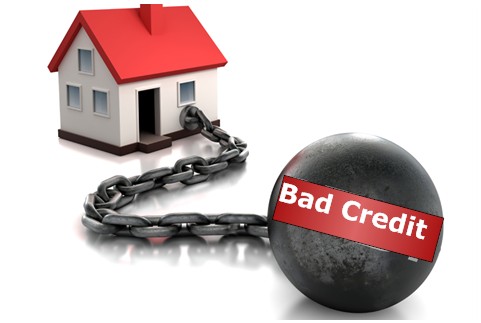
Day 212: Everyone Needs a House - Why is a House not Guaranteed?

"There are 19,69 million active credit consumers, of which 53,1% are considered to be in good standing. The number of consumers with impaired credit records has slowly been deteriorating from only 37.7% in late 2007 to the current level of 46.9%."


-- Michelle Dickens, A Disguised Threat, The Witness, p. 13. 06 April 2013.

So, only about 10,45 million South Africans have credit that is in good standing. With a population of 50,5 million - of which about 18.5 million are under 18 - we have an adult population of 32 million. Of these 32 million only 10,45 million have access to credit - that is about one third. Two thirds is entirely excluded from credit.

Now - what do you need credit for? Anything from buying a car to buying a house/apartment. Although, currently, in South Africa, people have more and more started paying for daily expenditures such as food and clothing through credit as well.

Now - from those whose credit is in good standing - we have to remember that only a fraction of that segment will be able to actually afford something like a car or a house, because to have good credit doesn't mean that one has a income high enough to be able to get a loan or a bond large enough to be able to buy such things as cars and houses. So - we halve that amount - then we end up with 5,28 million adult South African citizens who can afford to buy a house or a car.

To have a house or an apartment is not a luxury - it's a basic necessity - everyone household should own one. Currently less than 10% of the South African population is capable of buying a house - one that isn't made of mud and sticks.

So - how is it that we think it is okay to have a market force decide on the distribution of something as necessary as housing? Where we end up with only a 5th of the population having access to the funds to buy a house?

If this is what we as a people think to be an effective way of distributing the goods and services that exist among the population - then yes, by all means - let's continue with what we have. But if you as I see the ludicrousness in this situation - then I suggest you investigate Equal Money Capitalism as an alternative way of distributing resources. A way where every household is guaranteed to have a house - lol, at least, then it would make sense to call it a 'household'.
Enhanced by Zemanta

27 March 2013

Day 210: New Sin Tax on Sugar Introduced!

Yes - finally - after years of raising sin taxes on tobacco and alcohol - governments have started seeing that the most harmful substance was still rampantly being consumed, a substance that not only influences and damages the health of adults and teenagers - but of children too. Governments are finally raising a sin tax on any products that contain Sugar - and with Sugar is not meant Sucrose, but fructose specifically - as this is the harmful substance that acts like a poison inside the human body and causes a whole range of diseases.

Finally!!

In making sugar more expensive, we're creating incentive for people to look at what they eat and rather buy sugar-free products. So - that when you go to a fast food restaurant, a salad will not be the most expensive item on the menu, but the cheapest. And so will it be in any other restaurant and in any shop and in any market. This means that so much money will be saved on treating the consequences of excessive sugar consumption - in essence, preventing the disease before it manifests.

Finally...

Yeah...

Wouldn't that be great - to open up your newspaper and see something like this being printed? I suppose sugar and disease are both just too lucrative to be taken on and reigned in. What kind of economic system do we live in if we cannot make these kinds of obvious decisions, just because it would 'cost the economy too much' - what is the use of an economy if the people in it aren't supported by it? Where, now - people are obese and have chronic illnesses such as diabetes just because our diets are determined by what's affordable - and what's affordable is a cheeseburger. And a cheeseburger is full of high fructose corn syrup - and that will slowly kill you.

I suggest all governments implements a sin tax on Fructose to Prove that they Care about the well being of the citizens in the country. And I suggest that if such a sin tax would come at a great cost in terms of industries being hit and jobs being lost - that the economic system in itself is redesigned so that a decision that is made to support life on the one hand does not require a trade off where life is harmed on the other hand. That's just basic common sense. For suggestions on such economic systems, visit www.equalmoney.org and http://economistjourneytolife.blogspot.com/p/emc.html.
Enhanced by Zemanta

26 March 2013

Day 209: Health Care or Disease Care?

Please watch the following documentary for additional information:
Escape Fire: The Fight to Rescue American Healthcare


In the US 75% of healthcare costs go towards patients suffering from preventable diseases. Instead of focussing on prevention within educating people on lifestyle and what consequences come along with what lifestyle – the healthcare system only bothers with dealing with the aftermath.

A person suffering from diabetes, who as a result has heart problems – will be filled with stents each time there’s a heart problem. Only symptoms are alleviated and the problem remains. This method of treatment is of course very good for the pockets of the medical industry. The patient is not getting better, he’s also not really dying and he keeps on coming back. The very point that the cause and origin of so many people’s preventable chronic disease is not even discussed is questionable to say the least. This clearly shows a lack of integrity and care as it becomes obvious that an actual solution is not was is being sought after – but merely the management of the disease.

In Equal Money Capitalism, we reverse everything. Instead of tending to Consequence we focus on Prevention. Education will have a primary role within Health Care, within making people aware of how they can best support themselves and their bodies so each one can live at optimum capacity. People who pursue a career in medicine will be those who truly have a passion for the practice and really want to take care of people (read Day 188: Simple Solutions in Equal Money Capitalism on how this is made possible).

Changing our approach to health care will not only save us tremendous costs in monetary terms – but will also save on a lot of harm as the result of overtreatment and limited symptomatic relief. Consider also that a lot of patients only go to the doctor and are on prescribed drugs because they are overworked and cannot cope with the pressure of the demanding system that we have today. In such cases – medicine is not the solution, but a change in lifestyle – which is exactly what Equal Money Capitalism is all about.
Enhanced by Zemanta

22 March 2013

Day 207: Will Equal Money Bring about a Utopia?

It's interesting when the concept of Equal Money is introduced on discussion boards, on the one hand the Equal Money Team is blamed for being Utopian and on the other hand is being blamed of being fascist.

So - let's look at the Utopia point in this blog and in the next one look at the fascism point.

Will Equal Money Capitalism bring about a Utopia?

Introducing Equal Money will definitely change our society and solve many of the problems we have been struggling with for decades. Will it become a utopia, though?

You're still going to have to go to work. Your work environment will probably be different and you'll probably be doing something you actually like to do - and, hey, you might actually have a say in company policies. But, you're still going to have that alarm going off in the morning and you're going to have to show up for work every workday.

Pregnancies will still mess with your hormones, where you have to suddenly cry for no reason or have weird cravings or feel tired. Though, you'll have a qualified medical team to support you and so will your neighbor and every other woman.

Your house won't clean itself. You're still going to have to get your hands dirty to keep your household in order. Though, you'll have the comfort of knowing that it's the same for everyone else, since there will probably be no-one who wants to go clean up after another - so, cleaning will just be part of living in the physical world.

You'll still have to study and apply yourself in everything you do if you want to be effective in it. If you want to make something of yourself and your life, you'll have to work for it. And you might need to try out a whole range of different things to discover where you 'fit in'. Though, with Equal Money, everyone will have an equal opportunity to do this.

You'll still get sick - snotty nose, fever, diarrhea - those annoying physical conditions will still visit us from time to time. But you'll have your proper healthcare and a schooling system that is geared towards educating you to be informed about how to prevent as much illness as you can.

So, for those who are worried that Equal Money Capitalism is too much of a utopic idea - don't worry - life will still suck from time to time. But the main stress-point of worrying about money will be removed - which will make life so much more enjoyable.

It's not because we're showing a different way of living, a different way of organizing our society - a way that provides results that are best for all - that we're naive or utopic. It just means we haven't given up yet and that we are not interested in settling for anything less. Why should we settle for anything less? For some, Equal Money Capitalism might not bring about that much of a change at all - those that have a life of security will see it being continued. But for soooo many others, it would mean living a secure life for the first time. Does that make us evil? Does that make us stupid?

Did you know there's children in poor countries who think that there's something wrong with the world just for a moment, which makes it that they can't have food and a house to live in, that makes it that they have to work so that the family can make ends meet? And did you know they think that the people in rich countries are working every day to try to fix the problem so that they don't have to live like that anymore? I mean - let's do that - let's fix the problem.

Enhanced by Zemanta