Have you Ever been Swept Off Your Feet?

In both cases – whether the bubble was inflated with positive or negative energy – the participants in the bubble are being swept away further and further away from actual physical reality and start to see everything either ‘extremely negatively’ or ‘extremely positively’ – neither experience is grounded in reality – because the physical is neither positive or negative – it just is what it is.

And Then You Crash – Meconomics

In this little series, we’ve been investigating the phenomenon of inflation, how we in our daily lives participate in ‘inflating our reality’ and so, how we are on a personal level participating in the same principles/dynamics that we see playing out on a bigger scale when it comes to inflation, speculative bubbles and financial market crashes.

Welcoming New Life with Living Income Guaranteed

Comfort, security and nurturing are all things we wish are present when a baby comes into this world. Yet, these conditions are not a reality for many babies, as parents themselves like these things in their lives. In Pietermaritzburg, the capital of KwaZulu Natal province in South Africa, 3 to 5 babies are…

Humanity Washed Ashore

This was an excerpt of just one of the stories about the boy. Over the last few days, dozens have been written and published on various major news sites. What is more striking than the content of the posts, is the comments that are left on these articles. What is humanity’s response to such images, to such news?

Voting Fun – What does it Feel Like to Have a Say?

Now – before such increased direct political participation is a reality – let’s do a little test to see what it feels like. So – here are some mock-questions where you’re asked to give your input. Imagine that this relates to your direct reality (eg. your town) – and your answer has a weight that influences the outcome of the decision. Of course, in reality…

Showing posts with label structural adjustment. Show all posts

30 September 2012

Day 108: Virtual Democracies


This Blog is a continuation to:
Day 106: Structural Adjustment

In the above-mentioned blog-post the main types of economical reforms that are demanded by the IMF and the World Bank from developing countries have been laid out. Though, the IMF/World Bank don't keep to only demanding economic reforms. They also demand political reforms. Specifically, authoritarian regimes are asked to install liberal democracies in their countries - and if they don't, they won't receive further aid.

Once this demand for political reforms was declared, many, if not most, African countries started holding elections, started allowing opposition parties, started allowing independent media and freedom of speech, etc. On the surface, it seemed like the whole of Africa had converted to liberal values and principles - however, how substantial were the democracies and to what extent were they just an image, a projection, to keep the rich nations happy and willing to continue providing aid?

The holding of elections in African nations has often being applauded as a sign of successful democratic transition. However, most elections were problematic and the validity of their outcomes sincerely doubtful. Incumbents regimes (incumbent means 'currently in power') in many cases manipulated the electoral process in any way they could to be able to remain in power. They handpicked partisans to serve on so-called 'independent' electoral commissions, they denied opposition parties access to state-owned media, they used state resources to fund their electoral campaigns, invented new electoral rules and qualifications to exclude critical segments of the opposition and used the police and other security agencies to intimidate and harass opposition candidates. This frustrating of the electoral process often led to the boycotting of elections and the rejection of election results.

One of the consequences is that because the incumbent regime was now apparently re-elected by the people, the authoritarian rulers were given a form of legitimacy, further anchoring themselves into their power-seats.

In terms of opposition parties - as has already been shown - they often did not have a real chance at winning the elections. One of the problems was self-inflicted, where every disgruntled elite and aspirant president formed their own opposition party. At some point in Zaire there were over 200 opposition parties. The opposition parties did not really have a clear agenda or standpoint, except that they were 'against' the current rulers - and thus they didn't provide any desirable alternatives. Also, any 'loss of votes' on the part of the incumbent regime were distributed amongst all of these different opposition parties, not allowing any of them to gather sufficient votes to stand as a real 'threat' to the incumbent regime.

The upholding and protecting of human rights is seen as an important part of democracy - yet, in the 'newly converted' nations, human rights have continued to be breached - where the rights of outspoken critics, members of the opposition and independent media to free speech, association and fair hearings were regularly denied - where they were even harassed and detained without charge or trial for extended periods of time.

Accountability to the population is what democracy is all about - yet this is often completely absent in the African 'democracies'. They are generally entirely insensitive of the demands and welfare of their citizens, corruption, clientelism and violations of the rule of law are the general way of doing things. Furthermore, to what extent can national governments be accountable to their population if their loyalties lie with international donors and agencies upon which they depend for money?

We really only mentioned a few points in this blog - but this alone should clarify how the newly reformed African 'democracies' are in fact still the same old authoritarian governments, dressed up in a democratic costume. On the surface they will play the game of elections and opposition parties, but when it comes down to it, any method is used to remain in power and do whatever benefits themselves.

Such hypocrisy is, of course, to be expected if change is imposed from the outside. I don't know what the international community was thinking in forcing others to adopt democratic 'forms' of government. Yes, the form has changed, but the content is still the same. Change must be sincere and driven from within to be valid and long-lasting. To say: become democratic or you are cut off is not going to give birth to true democracy - anyone can see that...

Source:
Osaghae, E. 1999. Democratisation in sub-Saharan Africa: faltering prospects, new hopes.  Journal of Contemporary African Studies. 17(1): 5-28. Reprinted with permission from Dalro.

Enhanced by Zemanta

28 September 2012

Day 107: Getting Reality to Conform to an Illusion

This Blog is a continuation to:
Day 98: The Unholy Trinity
Day 99: Money Votes
Day 102: Liberalism
Day 103: Abstract Equality
Day 104: We have to Protect our Freedoms
Day 105: Human Liberties
Day 106: Structural Adjustment
 
 I forgive myself that I have accepted and allowed myself to have created an opinion as an ideology where apparently ‘freedom’ stands central and where ‘equality’ is valued – yet this ‘freedom’ and ‘equality’ is nowhere to be found/seen – as my opinion/ideology only values particular resources such as money, skills and talent – where these are not equally distributed among the population and so this result in inequality and lack of freedom as one can only do so much in this world when one is limited by money

I forgive myself that I haven’t accepted and allowed myself to see and realise that this ideology is only an opinion I have created in my mind – where my values work for me, where I was lucky to have been born in an environment where money and skill was made available to me through having been born in a family with money and thus having had access to education – and where I have taken this point and made it universal, where if I can do it, anyone can do – and so if one does not make a ‘success’ out of themselves, the reason for this must lie in the character of the person as them being ‘lazy’ – without ever stopping for a moment and seeing/realising that not everyone is born into an environment where money and education is available – and so what works for me might not (and most of the time, will not) work for others

I forgive myself that I have accepted and allowed myself to have taken my opinion which I did not practically test out / challenge in physical reality and turned it into a grand-scale opinion as ideology – and then used money as a way to enforce this ideology on others – where if others want to have money to help themselves they must comply to my ideology and so they go and comply to my ideology which has no relationship to how things actually physically, practically work in this world – but since they see no other way of getting money, they will place themselves in this precarious situation as no choice is left

I forgive myself that I have accepted and allowed myself to believe that if my ideology/opinion works for me – it should work for everyone – without actually investigating whether it is so – where I then go and impose my opinion which is a made-up illusion, unto reality and try to get reality which is real to conform to my opinion which is an illusion – which then obviously only results in the abuse of reality in the attempt to change/mould it into something which it cannot be – where millions of people pay the consequence, since my opinion as ideology is being imposed on entire countries and their population

I forgive myself that I haven’t accepted and allowed myself to see and realise that my opinion/ideology only works if you have money –and thus if one goes and impose this opinion on an environment which lacks money: the consequences are disastrous


I commit myself to show that our current economic system as values is merely based on ideology as opinion and is not rooted in actual physical practicality

I commit myself to show that traditional economists are not interested in providing actual solutions which work for everyone but are only interested in preserving their opinion as illusion and trying to impose this on reality and try to get reality to conform to an illusion which is practically impossible

I commit myself to show the importance of dealing and sorting out one’s opinions as when these opinions turn into ideologies which get enforced/imposed on a massive scale the results/consequences are disastrous and completely unnecessary

I commit myself to show that our current economic system is based on opinion and does not consider what it actually means to support Life on Earth and so I commit myself to the abolishment of our current economic system so we can make way for a New Economic System rooted in Physical Reality instead of opinion so we may finally have an Economic System of support in place

I commit myself to show that if opinions are left unchallenged, the consequences can be deadly

I commit myself to show that unless the human as human nature change – we will remain in fucked-upness – as the nature/reality of opinion on a personal scale has not yet been properly investigated/challenged but instead been protected and defended in the name of “freedom” – and where this unchallenged point manifests in a bigger scale as an ideology which is left unquestioned and has disastrous consequence but yet no-one will speak up in the name of “freedumb”


Enhanced by Zemanta

26 September 2012

Day 106: Structural Adjustment

Next we will be looking at some of the main conditions that are called for by the World Bank and IMF, These conditions have been placed in order to ‘assist’ the borrowing country in economic growth so that it will be able to pay off its debts. In many cases though, the actual results from structural adjustment report that the borrowing country is worse off after having accepted a loan from the IMF/World Bank – while the rich countries are reap the benefits.

Government Reduction

The main reason the IMF and World Bank think that a country is unable to pay its foreign debt, is the assumption that the Free Market is being obstructed by government activity. Their rationale is that if the government gets downsized, markets will function more effectively, which in turn will stimulate economic growth.

In the case of government reduction policies the government requires to abandon certain functions so that the private sector can take these functions over and optimize them. In the areas or functions that the government still retains (because it is either impossible for the private sector to do it better or those functions that are hard to impossible to capitalise from but are a necessity for society) – cutbacks in spending and staff are demanded.

In most countries (both rich and poor), the government is the largest employer. In poor countries where a strong private sector has not yet been developed, the government is most often the dominant force in the country’s economy. Sudden and extensive cuts in government spending can leave hundreds of thousands of people jobless and contribute to a massive surge in unemployment. In addition to that, because the private sector is not as developed as in other countries, frequently the functions and services the government stopped providing, do not get continued by the private sector – because there is simply no-one to take it over!

Privatization

Government reduction goes hand in hand with privatization plans. Governments agree to lay off thousands of workers to prepare the way for corporations to privatize.
This however does not leave the private sector untouched by the IMF and World Bank. Privatization is often also affected by downsizing, as well as private employer assaults on unions and demands for wage reduction.

Labour Flexibility

IMF and World Bank often demand higher labour flexibility. This concept refers to the transformation of labour to a mere commodity. This policy promotes and enables companies to hire and fire workers, and change the terms and conditions of work with only minimal regulatory restriction.

The IMF/World Bank reason that if labour is treated like a commodity, the free market system will function more efficiently and effectively, which in turn will stimulate economic growth.

The theory however does not match up with reality. Joseph Stiglitz, former World Bank chief economist shared with ‘Multinational Monitor’: “The evidence in Latin America is not supportive of those conclusions. Wage flexibility has not been associated with lower unemployment. Nor has there been more job creation in general.” Where “labor market flexibility was designed to move people from low productivity jobs to high productivity jobs, too often it moved people from low productivity jobs to unemployment, which is even lower productivity.”

Wage Decompression

Wage decompression refers to the increasing of the ratio of highest to lowest paid worker. This concept is most commonly applied within the public sector where the government has the authority to regulate wages, and is done in order to “reduce government expenditure”. However, this concept is not applied to managers where the belief is held that higher pay is needed to attract high quality employees and to provide an incentive for hard work.

Sometimes the World Bank and IMF also apply wage freezes, wage cuts and wage rollbacks in the private sector (where the minimum wage is frozen or reduced). These various policies of wage adjustment are often referred to “wage flexibility”.

Pension Reforms

Pension reforms come down to the implementation of lower benefits, provided at a later age – along with the privatization of social security


Enhanced by Zemanta

17 September 2012

Day 98: The Unholy Trinity

The World Banks, the International Monetary Fund (IMF) and the World Trading Organization (WTO) – together they form the ‘Unholy Trinity’.
Together these three organizations form a vast and extensive set-up that enforces a neo-liberal economic ideology through conditional lending and foreign aid


The World Trade Organisation

At the end of World War II, it was proposed that a global economic organisation ought to be established. This organisation – the International Trade Organisation (ITO) – would have the task of establishing rules relating to world trade, business practices and international investment.
Through opposition of the United States though, the ITO never came into being.

Later on, some twenty-three countries entered negotiations in relation to tariff reductions. These negotiations led to tariff reductions affecting roughly one-fifth of world trade. Among the tariff reduction negotiations, other agreements were reached on rules of trade. These agreements become known as the ‘General Agreement on Tariffs and Trade’, also known as ‘GATT’.
Through the establishment of the GATT, trade barriers were gradually brought down and world trade started growing. Throughout the years, non-tariff trade related barriers started demanding more and more attention as the tariff subject was becoming of lesser importance. It was decided that a new organization should be set up to replace the GATT. This organization is now known as the World Trade Organization (WTO).
The WTO carried over its key principles from GATT: non-discrimination and national treatment.
These two principles are integrated in the overall mission of the WTO, which encompasses the promotion of fair competition, insurance of market access, encouragement of economic development and economic reform.


The World Bank & the International Monetary Fund

Besides the WTO, two other global organisations were set up after the events of World War II: the World Bank and the International Monetary Fund.
To avoid re-experiencing a complete collapse of economic relations which had followed the First World War, discussions were held between countries regarding the shape of post-war international economic order.
The end result of their regular discussions was the formation of a framework of what would become the International Monetary Fund (IMF) and the International Bank for Reconstruction and Development (World Bank).


The function of the IMF is to provide its members loans under different programmes (short, medium and long-term). Each member country is charged with a particular quota for their membership which is in proportion with their economic power. The same way, will the voting power of a country within the IMF and World Bank depend on their economic wealth. As a result, the United States holds for instance 20% of all votes – while 43 African countries together hold less than 5%.


The IMF’s most prominent role is to intervene, on request, whenever a country is experiencing a crisis in its international payments. The price countries pay for a loan is an agreement by the borrowing country to make fundamental changes to its economy (which generally means making amendments to the government and its relation to the free market) – to prevent the reoccurrence of the same problem. These requirements are known as “IMF conditionality” or “structural adjustment policies”.


Originally the World Bank was known as the International Bank for Reconstruction and Development (IBRD). The name clearly indicates that the main purpose for creating the organisation was to assist with the reconstruction of countries that had been badly affected by World War II. As time went by the countries affected became more stable, it was suggested that undeveloped countries could benefit from capital investment to speed up the development process. In the meantime the IBRD has become one of five subgroups within the World Bank. Each group has a different focus – though all groups are related towards the development of poor countries, and only developing countries are allowed to borrow from the World Bank (unlike the IMF).

Enhanced by Zemanta

16 June 2012

Day 20: The Insanity of Economics - Food Aid Does Not Help the Poor

I forgive myself for not accepting and allowing myself to see and realise the insanity of how the economy works if a country wherein half the population is starving, exports 65% of its food produce to richer nations.

I forgive myself for not accepting and allowing myself to realise that the rules by which the game of economics is currently played is actually killing billions through hunger and starvation because it makes more 'economic sense' for local farmers in developing countries to sell their crops to other countries that can actually pay the higher price of their crops than to feed the local starving community.

I forgive myself for not accepting and allowing myself to realise that donating food to developing countries does not serve them and only serves to suppress my own guilt for accepting an economic system to create a situation where people starve in a world of plenty - because poor people will accept donated food or food that is sold at a very low price from donating countries rather than to buy food produced by local farmers, which completely destroys the local agricultural economy, leaving the developing countries dependent upon the rich to feed them, while there is sufficient and rich arable land to cultivate their own food and farmers with the know-how to do it.

I forgive myself for not accepting and allowing myself to realise that in my attempt to suppress my guilt through a quick-fix of donating food rather than looking for and supporting long-lasting sustainable solutions - I am actually killing people.

I forgive myself for accepting and allowing myself to believe that donating food to the poor starving children is a noble act because I believe that this is what starving people need - without looking at the actual implications and consequences of food aid and how it merely perpetuates dependency on rich countries and therefore perpetuates underdevelopment, including poverty and starvation.

"Some years back, a keynote speaker at the International Famine Centre at Cork, Ireland, detailed how maize was loaded on ships bound for Britain at the height of the great Irish potato famine that killed some 1.5 million people more than 150 years ago. He paused and then lamented: “I wonder what kind of people lived at that time who were not even remotely offended at the sight of millions dying of hunger in the same village where the ships were being loaded.”"
— Devinder Sharma, Africa’s Tragedy; Famine as Commerce, November 10, 2002

I forgive myself for not accepting and allowing myself to see and realise the insanity of the current economic system if a country where 1.5 million people are dying of hunger, loads ships filled with maize and exports them to Britain.

I forgive myself for not accepting and allowing myself to realise that the same kind of people live in our time under the same economic principles, where countries with starving populations export their food produce to other nations because the own starving population is too poor to pay for it.

I forgive myself for accepting and allowing myself to force poor countries to remove any import tarrifs and trade barriers in order to receive financial assistance in the form of loans to aid their economy and then dump excess food produce in those countries, destroying the local food markets and aiding only the donor and exporting countries.

"Of the 830 million hungry people worldwide, a third of them live in India. Yet in 1999, the Indian government had 10 million tons of surplus food grains: rice, wheat, and so on. In the year 2000, that surplus increased to almost 60 million tons — most of it left in the granaries to rot. Instead of giving the surplus food to the hungry, the Indian government was hoping to export the grain to make money. It also stopped buying grain from its own farmers, leaving them destitute. The farmers, who had gone into debt to purchase expensive chemical fertilizers and pesticides on the advice of the government, were now forced to burn their crops in their fields.

At the same time, the government of India was buying grain from Cargill and other American corporations, because the aid India receives from the World Bank stipulates that the government must do so. This means that today India is the largest importer of the same grain it exports. It doesn’t make sense — economic or otherwise
."
— Anuradha Mittal, True Cause of World Hunger, Institute for Food and Development Policy, February 2002

I forgive myself for not accepting and allowing myself to realise and see that starvation and hunger is not a result of a lack of food, but a lack of money and a sly game of politics that serves the economic powers in the world.

I forgive myself for not accepting and allowing myself to realise that charity and food donations will never stop world hunger - only a new economic system wherein each one is provided for unconditionally as the starting-point for the distribution of resources will make an end to this atrocity.

I commit myself to show how charity and food donations to poor countries don't help poor countries get richer, but instead dooms them into a downward spiral of dependency and helplessness.

I commit myself to show the hypocrisy of rich nations for demanding of developing countries to remove all trade barriers as a way to stimulate economic growth, while those rich nations themselves used extreme protectionism to gain the wealth they have today.

I commit myself to show the insanity of the economic system where in order to survive, farmers sell their crops to nations who don't need them while allowing the local population to starve.

I commit myself to show how slavery is very much a contemporary problem where poor countries are literally economically enslaved to the rich to do their bidding.

I commit myself to supporting and establishing a new economic system where common sense replaces insanity through founding the economy on the principle of what's best for all rather than 'every man for themselves'.

10 June 2012

Day 15: SAPs: Structural Adjustment Programs or Silent Annihilation of the Poor?

I forgive myself that I haven't accepted and allowed myself to see and realise the consequences due to badly designed policies such as Structural Adjustment Programs where the Developed Countries apparently do the Lesser Developed Countries (LDCs) a favour through granting them a loan, where a whole bunch of conditionalities are attached to this loan which actually on work in the favour of the "Developed Countries"

I forgive myself that I haven't accepted and allowed myself to see and realise that in the current world economic system the lifestyle and consumption habits of the rich nations are only sustainable at the expense of the continued deterioration of living standards of the poor nations

I forgive myself that I have accepted and allowed myself to impose rules unto other which I do not follow myself such as demanding LDCs to drop their protectionist barriers, tariffs and quotas while I as the Developed Countries will maintain and even raise more barriers to "protect" myself/ourselves from the cheap goods coming from poor countries

I forgive myself that I haven't accepted and allowed myself to see and realise that the hypocrisy of economists all around the globe is costing millions of lives

I forgive myself that I have accepted and allowed myself to have created a world where 21 000 children die on Earth EVERY DAY

I forgive myself that I haven't accepted and allowed myself to make an issue of the thousands of children dying every day

I forgive myself that I have accepted and allowed myself to have created a world where money is more important than the lives of others -- where the media will not broadcast what is going on day in and day out in terms of people dying where a child dies every 4 seconds yet it is not considered news worthy

I forgive myself that I have accepted and allowed myself to have created a world where humans will only 'move' when they are triggered through "sensationalism" -- and thus the media and the news will not broadcast the thousands of people dying every day but will broadcast conflicts, earthquakes, war and tsunamis -- and within that I forgive myself that I haven't accepted and allowed myself to see and realise that the 21 000 children (and that is only children under 5!) dying every day, is the equivalent to a 2011 Libya conflict-scale death toll happening every day, equivalent to as 2010 Haiti earthquake occurring every 10 days, a 2004 Asian Tsunami occurring every 11 days, an Iraq-scale death toll every 19-46 days -- yet somehow these sporadic events are more newsworthy and more "sensational" and the death and despair happening --every--single--day

I forgive myself that I haven't accepted and allowed myself to see and realise that I am an accomplice in child murder every moment of every day as long as the current world economic system is maintained and supported -- as the current world economic system does not care about poverty, hunger and disease when they are happening to the poor -- which turn out to be the majority of the population

I forgive myself that I have accepted and allowed myself to have created a world where 2.5 billion people lack access to improved sanitation -- while others have their bathrooms made out of gold

I forgive myself that I have accepted and allowed myself to have created a world where 1 billion children are deprived of one or more services essential to survival and development -- while others have more money than they can ever spend

I forgive myself that I have accepted and allowed myself to have created a world of polarity where 1.1 billion people are underweight and at the same time 1.1 billion people are overweight -- indicating that there's some serious shit going on in the world

I forgive myself that I have accepted and allowed myself to have created and allowed a world to exist where 40-50% of all food for harvest never gets eaten -- while more than half of the population on Earth does not get their basic food requirements met


I commit myself to change the current world economic system of murder and genocide to a world economic system of LIFE

I commit myself to expose the horror and atrocities committed daily through simple acceptance and allowance of the status quo

I commit myself to expose the media for the money-grabbing industry it is -- an industry which is not interested in truly reporting the state of the world but only wants to broadcast "News" as "Sensationalism" and since the continued suffering of our fellow human beings in the world is not "new" anymore it is simply neglected

I commit myself to the transformation of the media and "watchdogs" of the world to a media which truly report the events occurring around the world without being selective about that is broadcasted based on the motivation of money

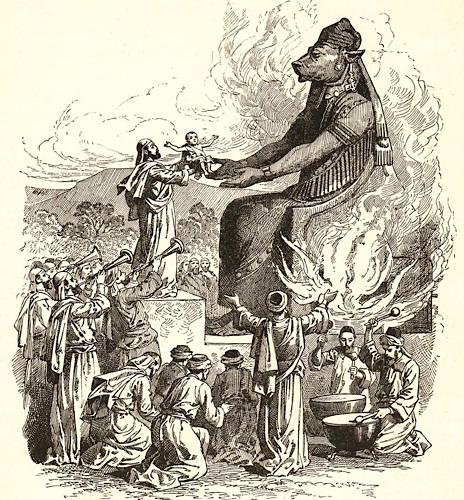
I commit myself to expose how the current world economic system where the Money God rules, demands a child sacrifice every 4 seconds which is willingly offered by us collectively through our acceptances and allowances

I commit myself to expose the evil that has become of us humans and the extent that we will abuse one another in the name of Money and Dreams

I commit myself to a New world economic system as Equal Money where all humans basic needs will be cared for -- out with the golden toilets!

I commit myself to the re-evaluation of all economic policies as they were only ever done from the starting point of self-interest and greed and NEVER within the best interest of the whole

I commit myself to the establishment of a World Economic System which is Best for All Life