Have you Ever been Swept Off Your Feet?

In both cases – whether the bubble was inflated with positive or negative energy – the participants in the bubble are being swept away further and further away from actual physical reality and start to see everything either ‘extremely negatively’ or ‘extremely positively’ – neither experience is grounded in reality – because the physical is neither positive or negative – it just is what it is.

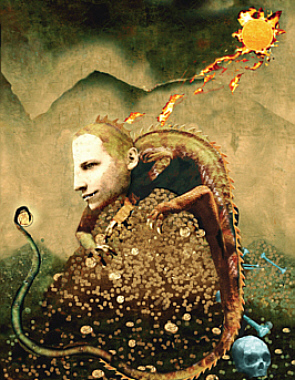
And Then You Crash – Meconomics

In this little series, we’ve been investigating the phenomenon of inflation, how we in our daily lives participate in ‘inflating our reality’ and so, how we are on a personal level participating in the same principles/dynamics that we see playing out on a bigger scale when it comes to inflation, speculative bubbles and financial market crashes.

Welcoming New Life with Living Income Guaranteed

Comfort, security and nurturing are all things we wish are present when a baby comes into this world. Yet, these conditions are not a reality for many babies, as parents themselves like these things in their lives. In Pietermaritzburg, the capital of KwaZulu Natal province in South Africa, 3 to 5 babies are…

Humanity Washed Ashore

This was an excerpt of just one of the stories about the boy. Over the last few days, dozens have been written and published on various major news sites. What is more striking than the content of the posts, is the comments that are left on these articles. What is humanity’s response to such images, to such news?

Voting Fun – What does it Feel Like to Have a Say?

Now – before such increased direct political participation is a reality – let’s do a little test to see what it feels like. So – here are some mock-questions where you’re asked to give your input. Imagine that this relates to your direct reality (eg. your town) – and your answer has a weight that influences the outcome of the decision. Of course, in reality…

Showing posts with label choices. Show all posts

10 February 2013

Day 189: Will your Level of Education Determine your Income in EMC?

This blog post is in relation to a comment placed on one of our previous blog-posts - you can check out the full comment at http://economistjourneytolife.blogspot.com/2013/02/day-188-simple-solutions-in-equal-money.html

~ Since I am the one who made the comment, I will rebuttal your response also.
First you are comparing green apples to red and saying they are worth the same at the register, which I tend to agree with. But, my comment was based more on someone that had 4 yrs of college or previous experience to someone who dropped out of high school.

We can not dismiss the expense of a higher education, or the value of years of previous experience, by paying say a gas station attendant of fast food server the same as the doctor or technician you spoke of. Indeed a doctor or technician, and even a plumber, electrician, or carpenter are needed just as much in today’s society.

Understand that within Equal Money Capitalism – education will no longer be a point of ‘investment’ from which you are expecting ‘returns’. This is one’s approach currently as the result of our environment which promotes competition and profit for the sake of self-interest where it’s ‘each one on his own’ – and is in essence an approach based within survivalism. There’s not enough jobs for everyone to go around with, and so people chose an education and career according to the prospect of money linked to that education/career. This is not a real decision/choice made within the consideration of one’s passions and interest – but based on a fear of not making it within this world and ending up with nothing. People who’ve currently  gone through a process of education and spent a lot of money and work getting there experience a sense of entitlement towards ‘getting a good pay’ – but only because they have experienced the process they went through as being an unpleasant one. If it wasn’t for the reward as ‘a good pay’ – these people wouldn’t have made the same education and career choices. Studying and working for an extended period of time to do a job you love and care about will be the reward itself. Within that, you are not going to be comparing yourself with what other people are doing and what process they went through – because what you are doing and the decisions you have made are merely the common sense outflows/results of your passion and what it is you like to do within Life. So, you’re not going to receive extra compensation for your perceived suffering, because you will not be going through a process of suffering. One’s approach towards education and careers will thus change completely.

In terms of financial investment, education is a basic human right, and thus will be provided by the government through tax-monies. In other words – you won’t have to pay for it specifically, because it is part of the ‘package’ you receive as part of your basic rights within developing yourself to your utmost potential. So – here, again, you will not be spending more money on an education for a doctor or any other type of education – so, here, again – there will not be a sense of ‘deserving’ a higher pay because one spent more money on study fees or study loans.

But there again we can very well pay someone who just started in the trade and has little knowledge or skills, the same as someone who as invested several years into learning and refining their trade. There are different values to ones experience within their chosen specialty, A company cannot afford to pay the unskilled as much because they aren’t capable of doing the job themselves.

Within Equal Money Capitalism the only value worth valuing is Life. It’s not about who can do what job or who went through what process of Education – it’s merely a point of you are here, you are alive and thus you will be supported to remain Life. The idea that a company cannot afford to pay the unskilled is merely the outflow of having polarized wages. Where those who are considered having a ‘special position’ receive way larger sums of income than those who are considered to be within an ‘average’ work position. Once this polarization is out of the way – there will be enough money to go around to reach everyone. Realise also that within the context of an Equal Money Capitalistic System – there will be no such thing as ‘an unskilled worker’.  Once one has completed one’s primary education,  a person will be multi-skilled and capable of a multitude of tasks due to the broad spectrum of education that will be in place.

If you start demanding that all employees and people are paid the same, then what happens is the less experienced workers begin to loose there jobs and their job opportunities as employers begin to limit their hiring to only skilled and experienced candidates. This creating a less people with experience because they can’t get any, and higher demands on the fortunate few who are working. Not to mention higher costs and shorter supplies of said products.

This will not be the case because in terms of equalizing wages – you will still end up with the same amount of costs in terms of paying out wages (if not less) – and as such there should be no reason why one would hire someone whose “overqualified” so to speak to do a job that someone who is less skilled can do at the same level of effectiveness. In addition, the labour market will not operate according to supply and demand. Providing employment forms part of a company’s social corporate responsibility. And decision-making such as you’ve outlined above would be considered unethical. Whenever a person no longer requires to perform a particular job within a company, the company is responsible to provide it with a different task. For companies to just take away a person’s income, which is a person’s lifeline is unacceptable. With such principles in place, it will be in the company’s best interest to ensure that each worker is trained to the best of their ability and to make appropriate matches between a person’s skill-set and their role in the company.

17 July 2012

Day 46: The Economic Problem

Within the field of economics, no matter what issue or subject is being discussed – there is always some sort of trade-off involved. Since economics is defined within the context of unlimited wants with limited means/resources – choices require to be made. Within that, humans are studied in terms of how and what they choose among limited options to maximise their happiness.

Within economics, resources are categorised within three types:

1)    Natural Resources (land, minerals, fuel, animals, etc)
2)    Human Resources (labour)
3)    Man-made Resources (machines)

These are referred to as factors of production, as they are the inputs/means which are used within producing particular goods and services.

Note that money is not considered to be a resource, but a means of exchange with which you can purchase scarce resources.

Time is also considered a limited resource, as everyone only has 24 hours within a day – and so whether one is rich or poor – both will experience ‘scarcity’ from this perspective.

Since we only have so many available resources, to produce only so many goods and services – only so many wants can be satisfied and so we have to make choices.


-        When we use a particular resource towards the production of one thing, those same resources cannot go to the production of another thing (at least not at the same time).
-        When we decide to produce more of one good, there will be less for another good to be produced.
-        If we decide to watch a movie for an hour, we cannot use that same hour to go for a walk outside.

And so on…

This brings us to the concept of opportunity cost and the economic problem.

Let’s look at a few scenarios

You go to a shop with $10 in your pocket – you want some ice cream, chocolate, cigarettes and a drink. But you only have $10 (resources are limited) and so you have to make decisions about what you want to buy and what you won’t buy / “sacrifice”.

It’s the end of the week and you have the evening for yourself. You find yourself wanting to watch TV, go for a movie and go see some friends – but you can’t do this all at the same time, and so you have to choose what to do and what not to do.

The government has X amount of funds available to spend on new development programmes throughout the year. It wants to improve education, health facilities and employment opportunities. But since there is only X amount of money, the government will have to decide what to spend the funds on immediately and what will be postponed.

In all these cases, choices need to be made, where some wants will be satisfied and others will be left unsatisfied. In each one of the scenarios, decisions have to be made about what the person/group will opt for and thus sacrifice as well. From that perspective, there are always ‘costs’ involved, even though these may not always seem ‘obvious’.

There’s a particular phrase which is often used to point this out: “There Ain’t No Such Thing as a Free Lunch” – meaning someone will always have to pay for something even if it is presented as ‘free’ -- the resources had to come from somewhere and those resources are now not able to be used for something else.

Although scarcity is considered to be an essential component of the economic problem (=we have to make choices), it really only becomes a problem when we have competing / conflicting goals. If you have only one goal, and only so many resources – there’s no real decision making involved, as you are not faced with allocating your scarce resources between competing alternatives.  So if you have one goal, you do not have an economic problem – but currently, as humanity we do not have a singular goal – and even within ourselves we are conflicted about the various different things we want all the time. So we only have to make choices / sacrifices when we are divided about what it is we want. Not being divided and having only one goal is considered to be ‘unrealistic’ within current economics, and thus it is assumed that there will always be an economic problem. So this practically implies that within an Equal Money System, there will be no economic problem – as there will be only One Goal as What is Best for All Life – and thus we won’t have to make choices as sacrifices as we only commit ourselves to what is Best for All Life and disregard anything less.

But since we’ve currently valued everyone’s self-interest as equally valuable, no matter how relevant or irrelevant this self-interest is = we have an economic problem. And this has been totally accepted, in fact it’s part of the basis of established economics. So now when economists look a ‘cost’, they do not only look at ‘cost’ in monetary terms (also referred to as ‘accounting costs’) – but also look at ‘implicit costs’, in the sense of what could have been done alternatively if resources would have been used differently.

Within that, opportunity cost specifically, refers to the next best alternative one forgoes for the option which was chosen. So if you have $50 and you want both a jacket and a shirt – and you decide to spend the money towards the jacket – the opportunity cost is the shirt as the next best thing you could have gotten. A cost for economists is what you had to ‘give up’ to ‘get it’. So now this whole new dimension is added where with every choice you make you are burdened with “what if” as “what you could have done” alternatively. But if what you only ever want to do is that which is Best for All, then you are never faced with ‘sacrifice’ or ‘burden’ – as there is only one way as that which is Best for All – and so there is no wondering necessary in terms of how things could have been differently, as any other scenario is simply not relevant as it wouldn’t have been what’s Best for All. We’ve complicated things so badly for ourselves within valuing wants over needs, individual self-interest over What’s Best for All --- and then all the various different choices and sacrifices which need to be made just so we can what we want…

Economics will be a very, very simplistic matter within an Equal Money System – lol.

The ‘Economic Problem’ is not really a problem – we created this problem but it doesn’t have to be a problem in fact. It’s only a problem because we’ve decided that we want to try and live up to something which cannot be lived up to = where we want to satisfy unlimited wants with limited means – and so it’s not really an Economic Problem, but a Human Nature Problem – as we rather want to hold on to something unachievable for all, in the hope that we will be one of the lucky ones that’ll get a piece of the pie – while the majority will have to live a life of sacrifice where not even their basic needs are tended to so that some may attempt to satisfy all their wants and desires.

12 July 2012

Day 41: What is Economics – Part 2

See Day 40: What is Economics? For context

I forgive myself that I have accepted and allowed myself to believe that ‘economics’ is synonymous with ‘capitalism’

I forgive myself that I haven’t accepted and allowed myself to see and realise that economics has got to do with three basic question: what should be produced, how should it be produced and who gets to consume what is produced – and thus any system answering these questions can be considered as being ‘economics’ – and thus economics is not only limited to capitalism as the current world system which is in place

I forgive myself that I have accepted and allowed and agreed upon the definition of economics as that which deals with how limited resources are used to satisfy human wants and the choices/sacrifices we have to make in order to attain this goal

I forgive myself that I haven’t accepted and allowed myself to ever question the definition of economics – where the main goal is to satisfy human wants, which are assumed to be unlimited – with the use of limited resource – and which is thus in essence impossible, yet we will allow this to be the basis of our economic system, and thus it is no surprise that we currently live in an unbalanced world where every day we move one step closer to our own self-destruction

I forgive myself that I haven’t accepted and allowed myself to question the implied value judgment involved when being faced with economics, as the definition of economics --- where the focus lies on human wants, instead of human needs and within that I forgive myself that I haven’t accepted and allowed myself to see and realise the self-interested nature of this definition within only looking at what humans want/need – and not consider everything and everyone on this Physical Plane as the Earth, the Animal and the Plant Kingdom

I forgive myself that I haven’t accepted and allowed myself to see and realise, that the only reason that there is a trade-off for everything within economics – is because we are dealing with unlimited wants vs limited available resources – which can never be achieved in a balanced manner – and thus choices as sacrifices need to be made in order to make the system work – while we could have avoided all this unnecessary trouble if we’d only value Life as Sustenance and thus Limited Basic Needs over Unlimited Wants and Desires

I forgive myself that I haven’t accepted and allowed myself to see and realise that any economic system based on the current definition of economics as ‘unlimited wants vs. limited resources – what choices do we make?’ – is doomed to fail, as it is faulty by design. And within that I forgive myself that I haven’t accepted and allowed myself to see and realise that the only way we are going to make any economic system work, is through redefining economics itself and eradicate this inherent flaw – and bring about an Economic System which is balanced and sustainable within its very definition and starting point

I forgive myself that I haven’t accepted and allowed myself to see and realise that all the suffering in the world which is brought about as a result of our current economic system is in fact deliberate – within having agreed upon the definition of economics where we value Human Wants over Human Needs – and thus we have manifested a World of Greed where sacrifices/choices need to be made every day to keep the wheel of money running – and where this sacrifice has resulted in half the population of Earth living in poverty, the extinction and suffering of animals and disregard for the Plant world, where we hack and burn at will -- for the sake of attempting to satisfy the Unlimited Wants of a Few – and all this done deliberately and with permission through never ever having questioned the very definition of economics and through not having questioned the Nature and Character of Humanity within having made such decisions within drawing up such definitions – as if anyone would have done this, it would have been clear: We are Evil – which is the only way and reason an Economic System of Evil would exist within this World

I forgive myself that I haven’t accepted and allowed myself to see and realise that the only Real Value on Earth is Life – and within that, tending to basic needs is what is valuable, as this is tending to the Physical which is Always here – while tending to Wants and Desires is a waste of time, as they come and go and inevitably End at Death

I forgive myself that I have accepted and allowed myself to protect and defend the current economic system in the face of poverty and starvation by only pointing out to one part the definition of economics – as the scarcity of resources – where we’ll say “But there’s simply not enough!” – while conveniently leaving out that there is not enough and will never be enough in terms of satisfying our Wants an Desires – while there is plenty to satisfy everyone’s Basic Needs! And within that I forgive myself that I have accepted and allowed myself to Lie about the reality of the World within protecting and valuing my own Wants and Desires over the Needs of Others

I forgive myself that I have accepted and allowed myself to be a Criminal within the Face of Life